Day 14 (July 13, 2025): 38C in the Mangistau Desert
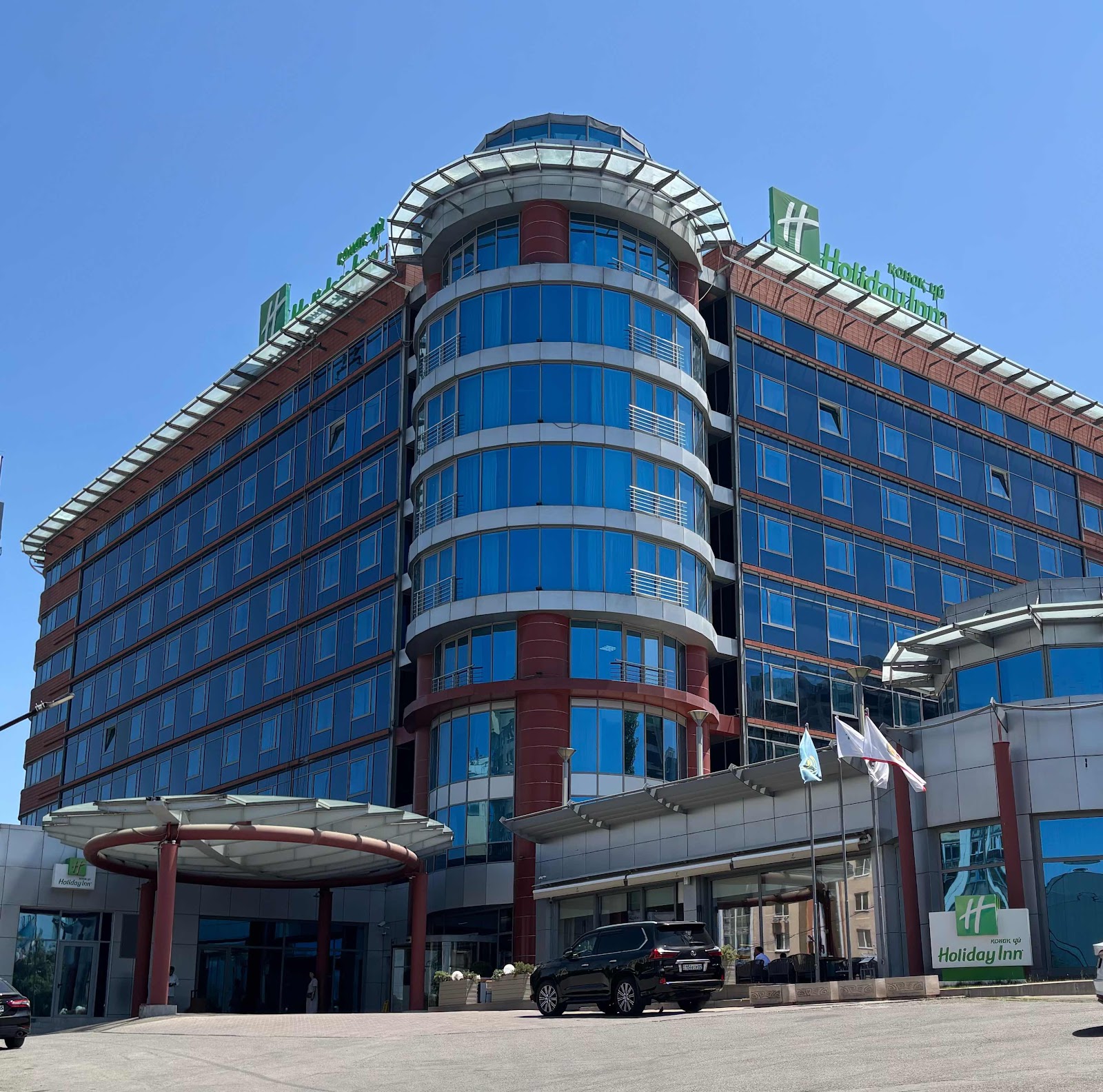
Our main reason for wanting to include Aktau on our itinerary was to be able to visit the Mangystau desert which, from photos, reminded us of Utah. Unfortunately, as we prepared for the trip back home in Canada, we were unable to find a way to book such a day-trip. When we arrived at the Holiday Inn just before midnight on Friday, the woman who checked us in had great English and was incredibly polite. We realized the safe in our room wasn't working, so she came to our room to reset it. When she finished that, she asked if we had plans to see any sights while we were in Aktau. I explained the trouble in trying to locate a tour to the desert and indicated that was high on my priority list for the next day. She said, "My mom is visiting, and I have hired a driver to take us to Beket-Ata on Sunday. We have space in the vehicle, would you like to join us?" We were in-like-flin, as the saying goes!
At 6:30AM, we were in the hotel lobby and, at 7:15AM, the driver arrived, with Akbota and her mom as passengers, as well as two other women. We set out on the long drive in the extreme heat, uncertain as to what the day would really entail, but open to whatever lay ahead.
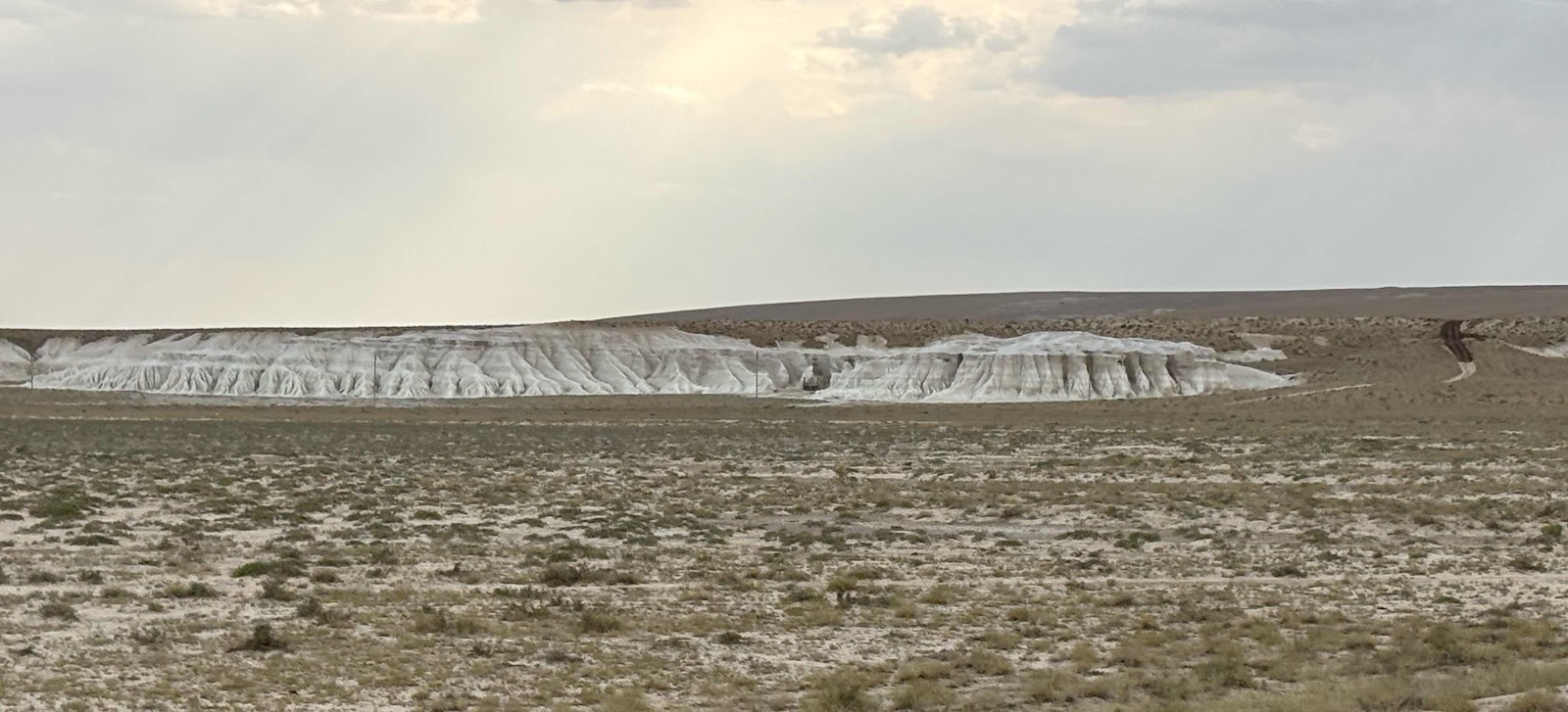
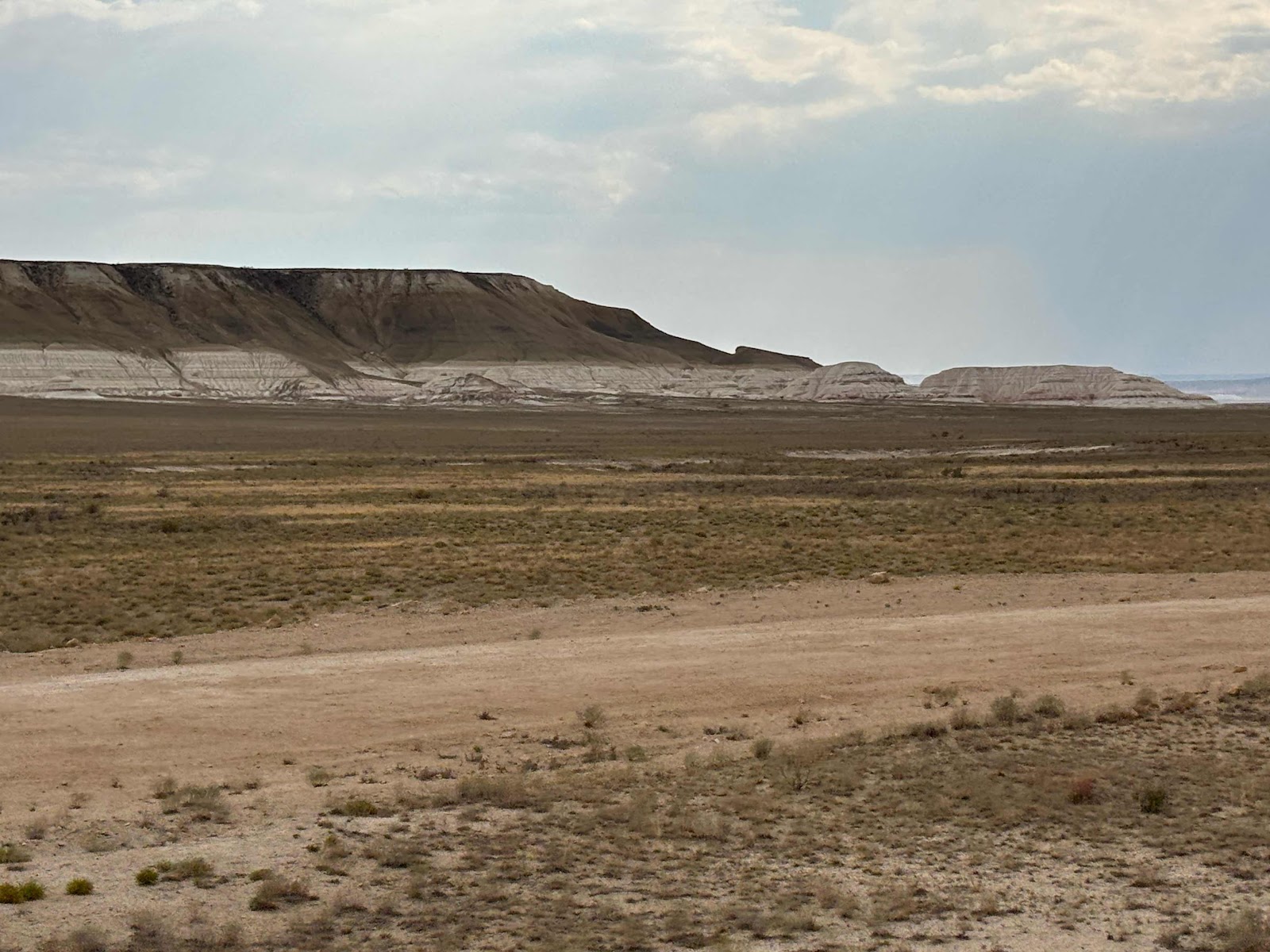
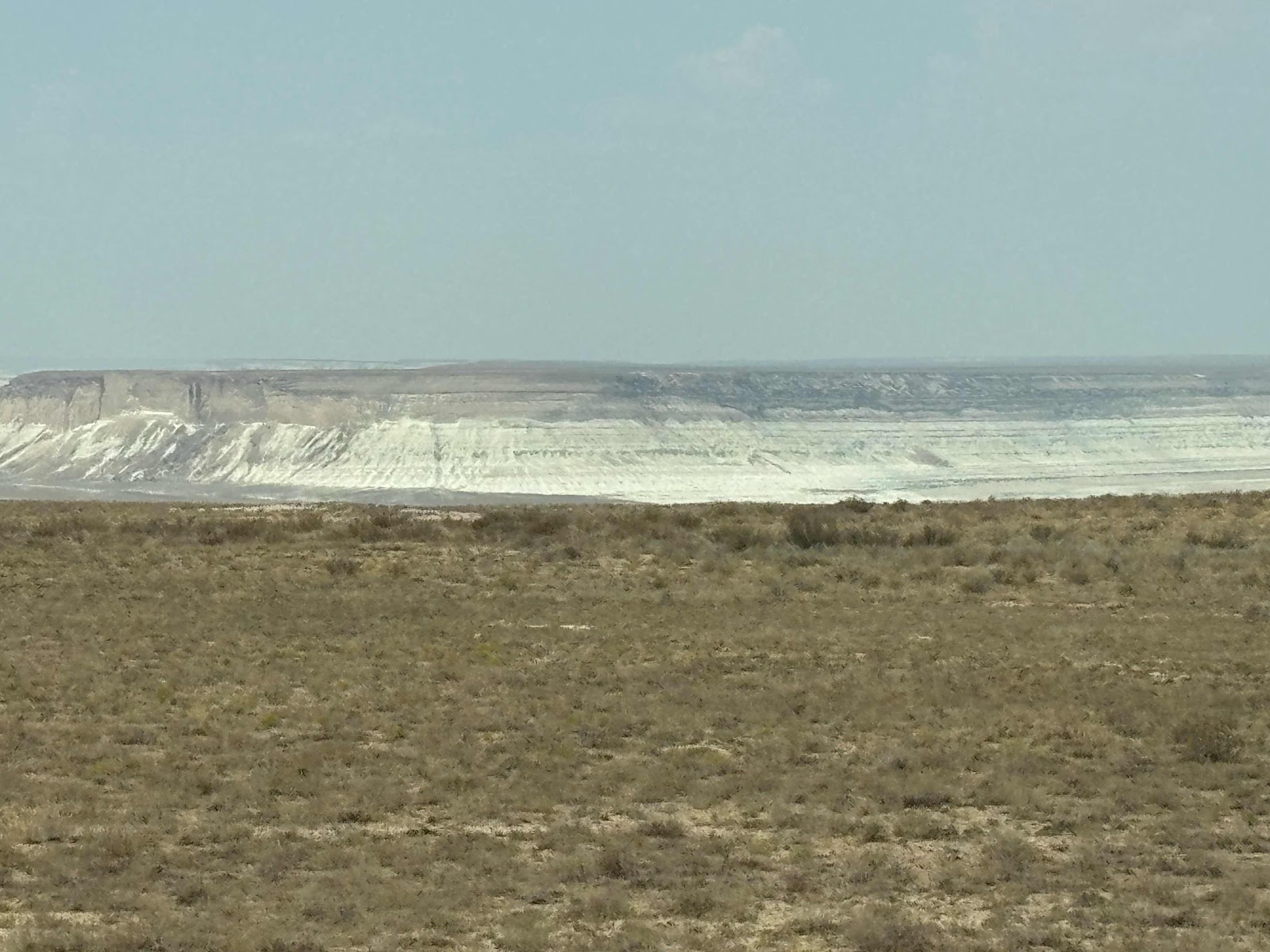
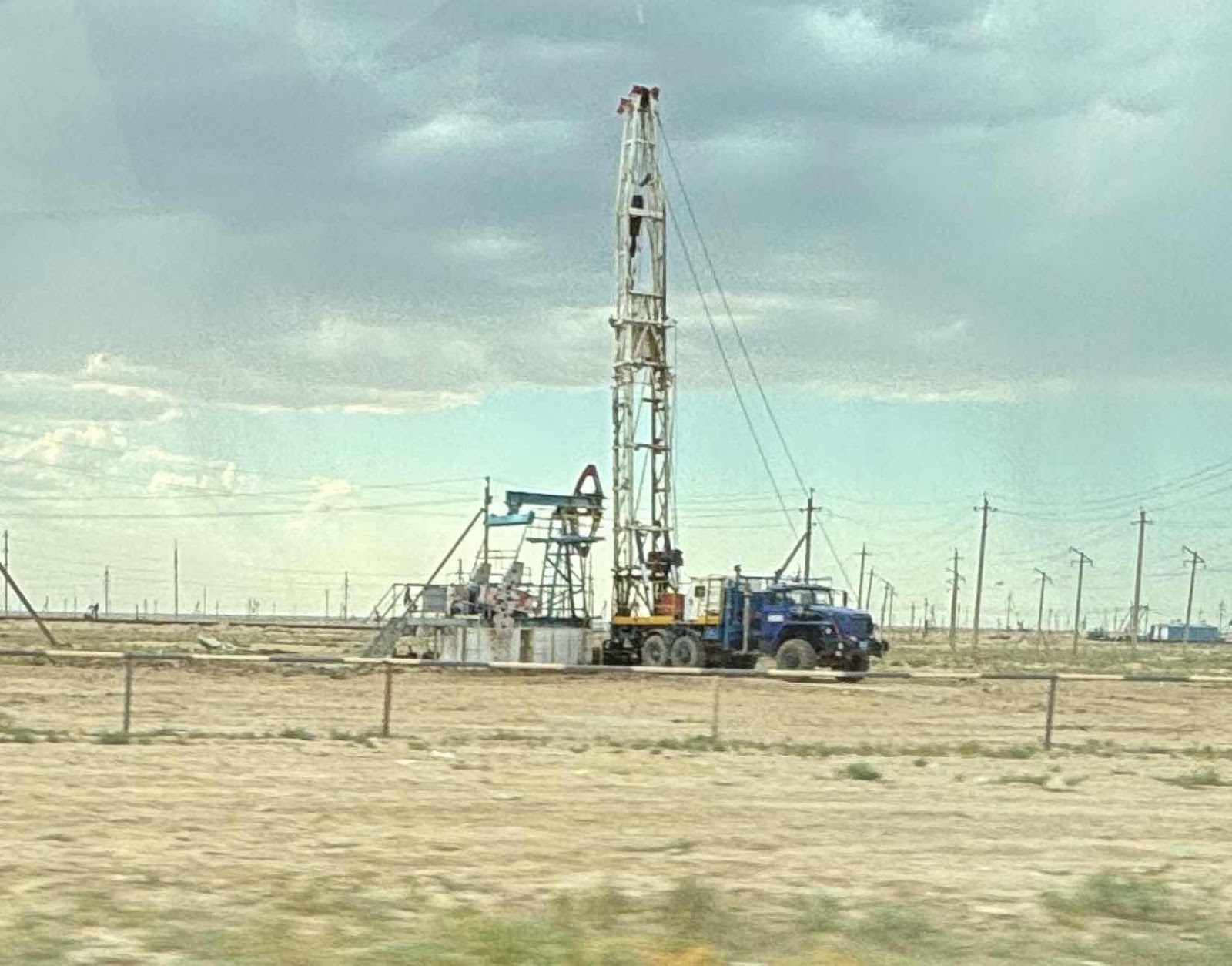
As we left Aktau, we soon began to see the source of the country's wealth: oil fields. The desert was littered with oil pumpers, rigs drilling new wells, even a refinery or two. Eventually, the oil fields passed and we started to see some amazing geological sights -- and it was truly Utah-like! The photos below speak for themselves.
We visited three holy sites during the day, each being larger and more important to the pilgrims that the previous one.
Long story story, it was a long day but filled with amazing experiences we would have missed, had we just spent the day in Aktau. When we arrived back at the hotel in Aktau at 8:30PM, we were physically and mentally exhausted, however, but it was all good. We grabbed a quick bite at the hotel's dinner buffet and, as the sun set over the Caspian Sea, we reflected on the unique and rich experiences of the day.
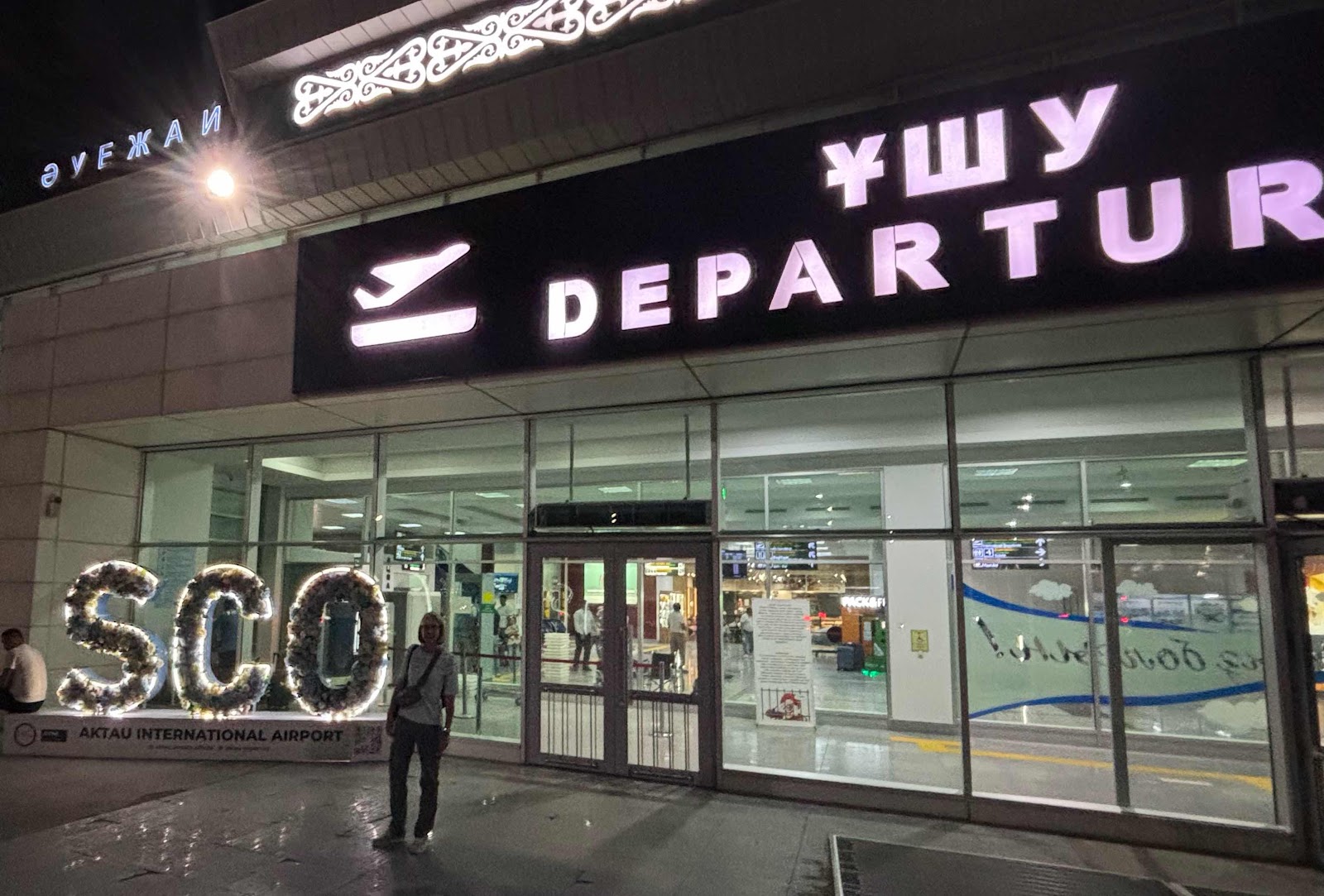
We were in bed by 10PM, attempting to sleep for a few hours before getting up at 1AM to prepare to leave for the airport and our 4:45AM flight to Istanbul. It is difficult to imagine that our Kazakh time has come to an end.
Scenes from the Mangystau Desert, enroute to the final destination on our journey today: Beket-Ata:
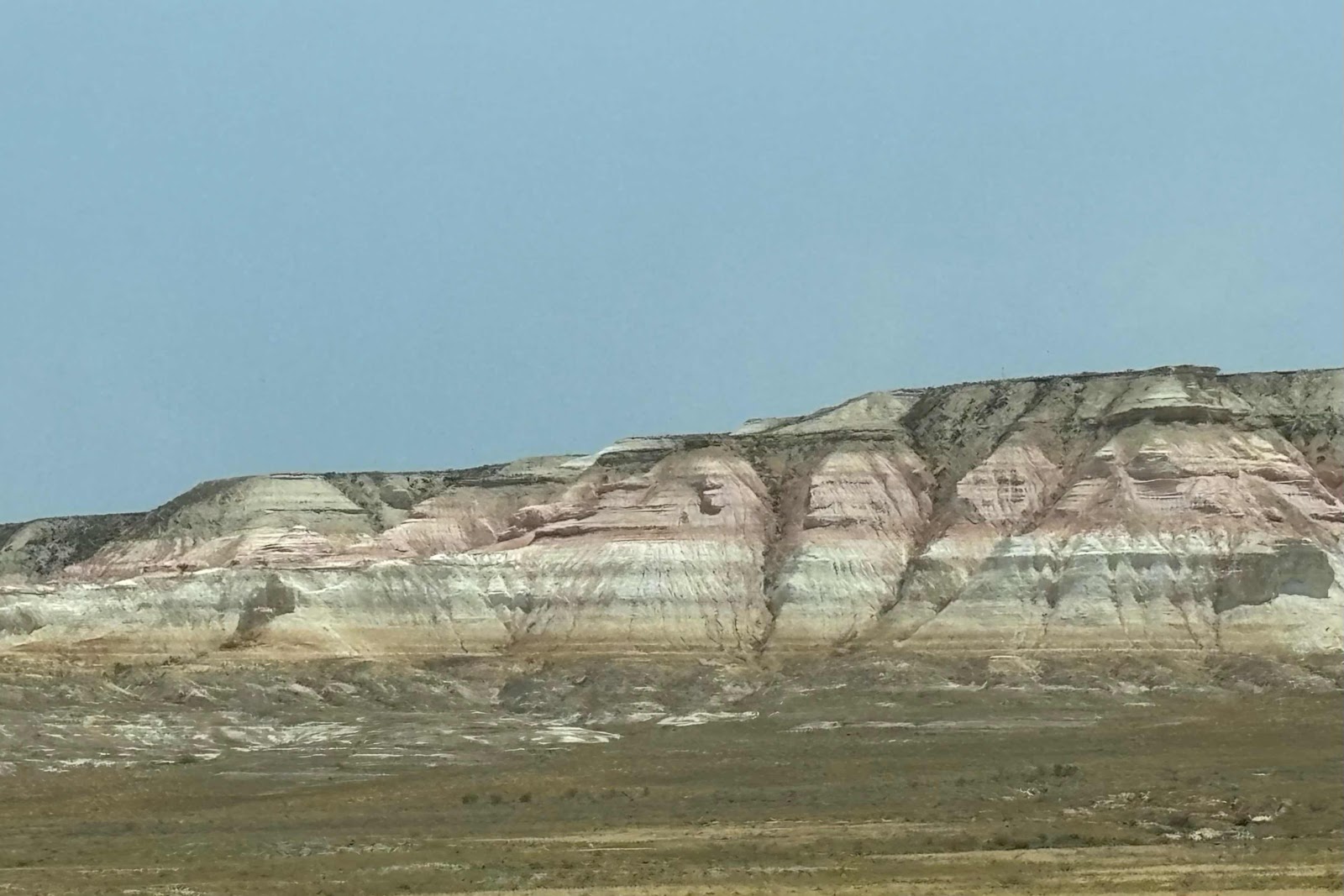
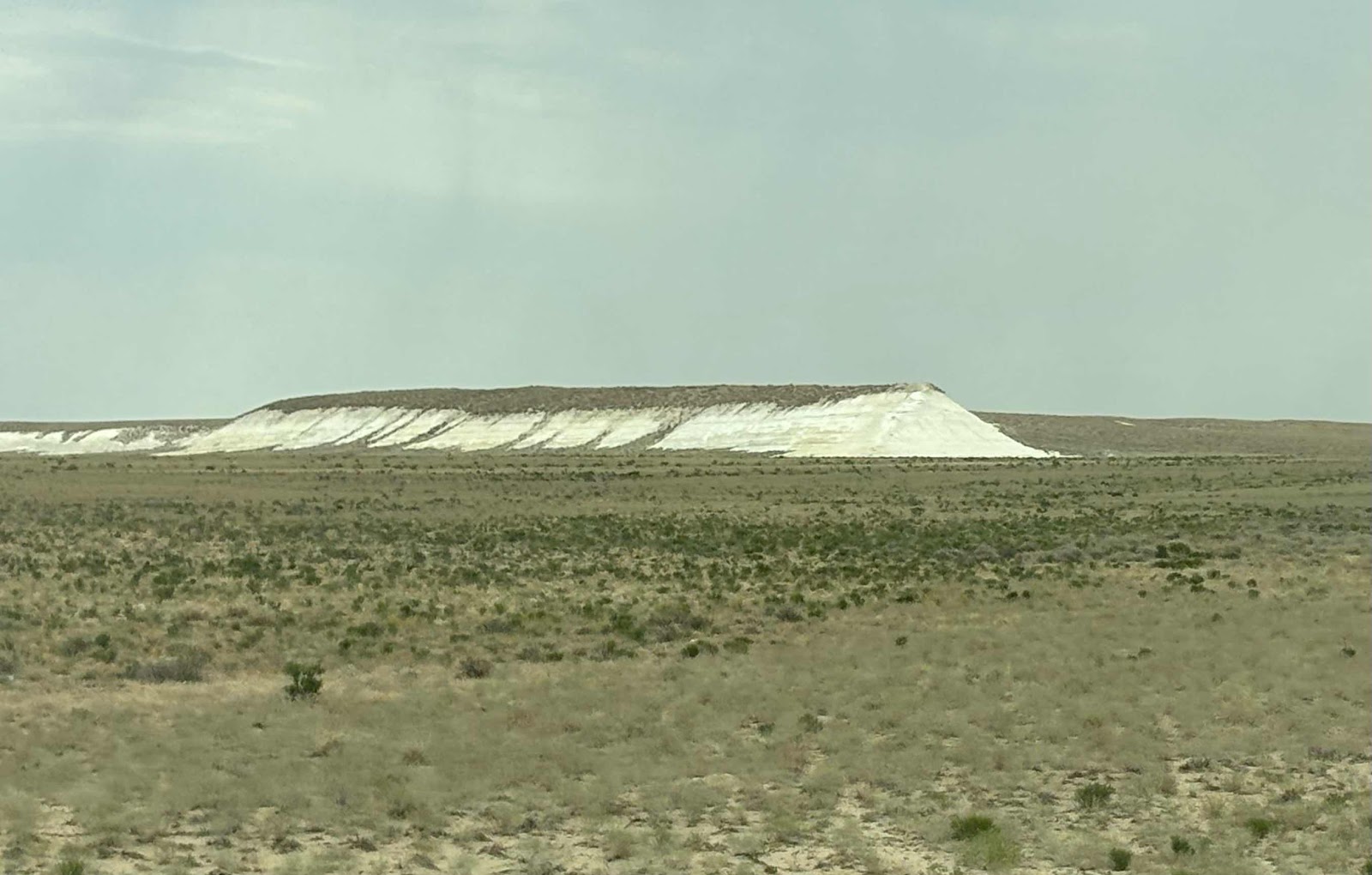
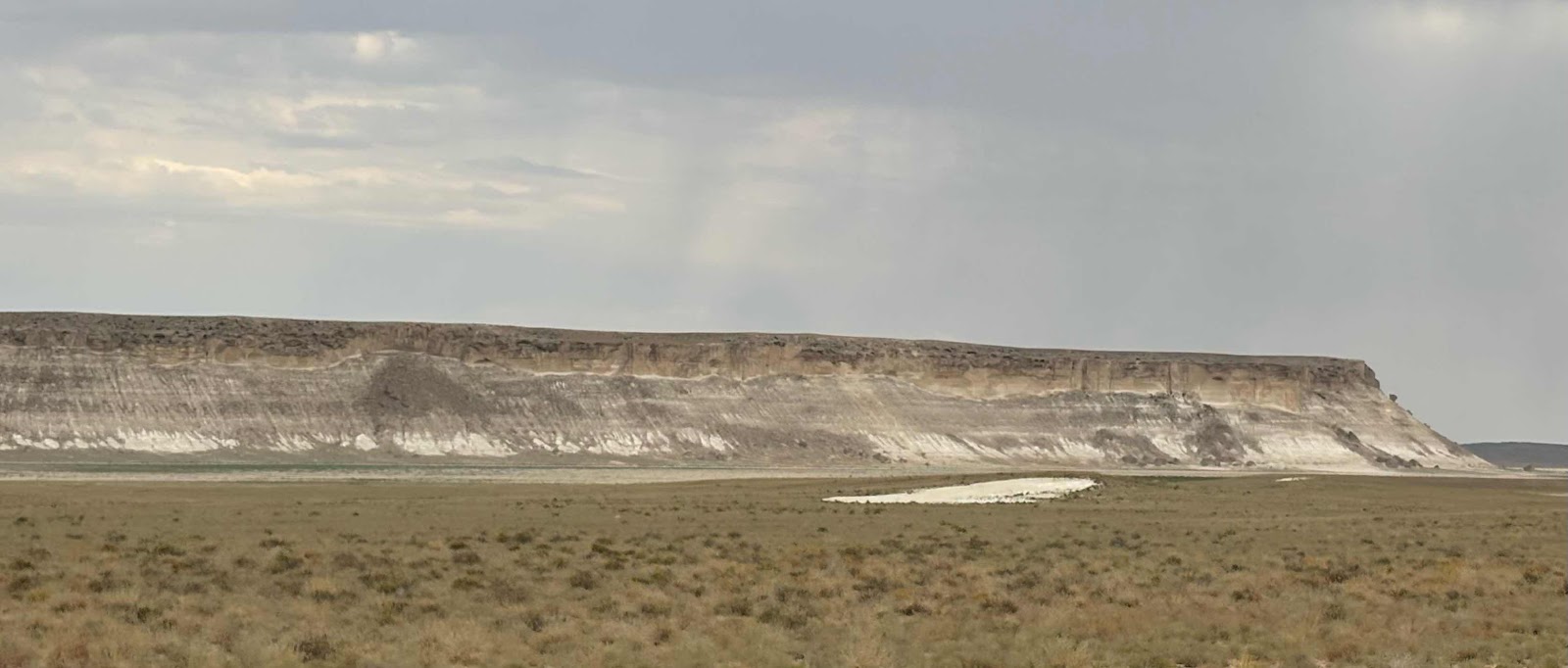
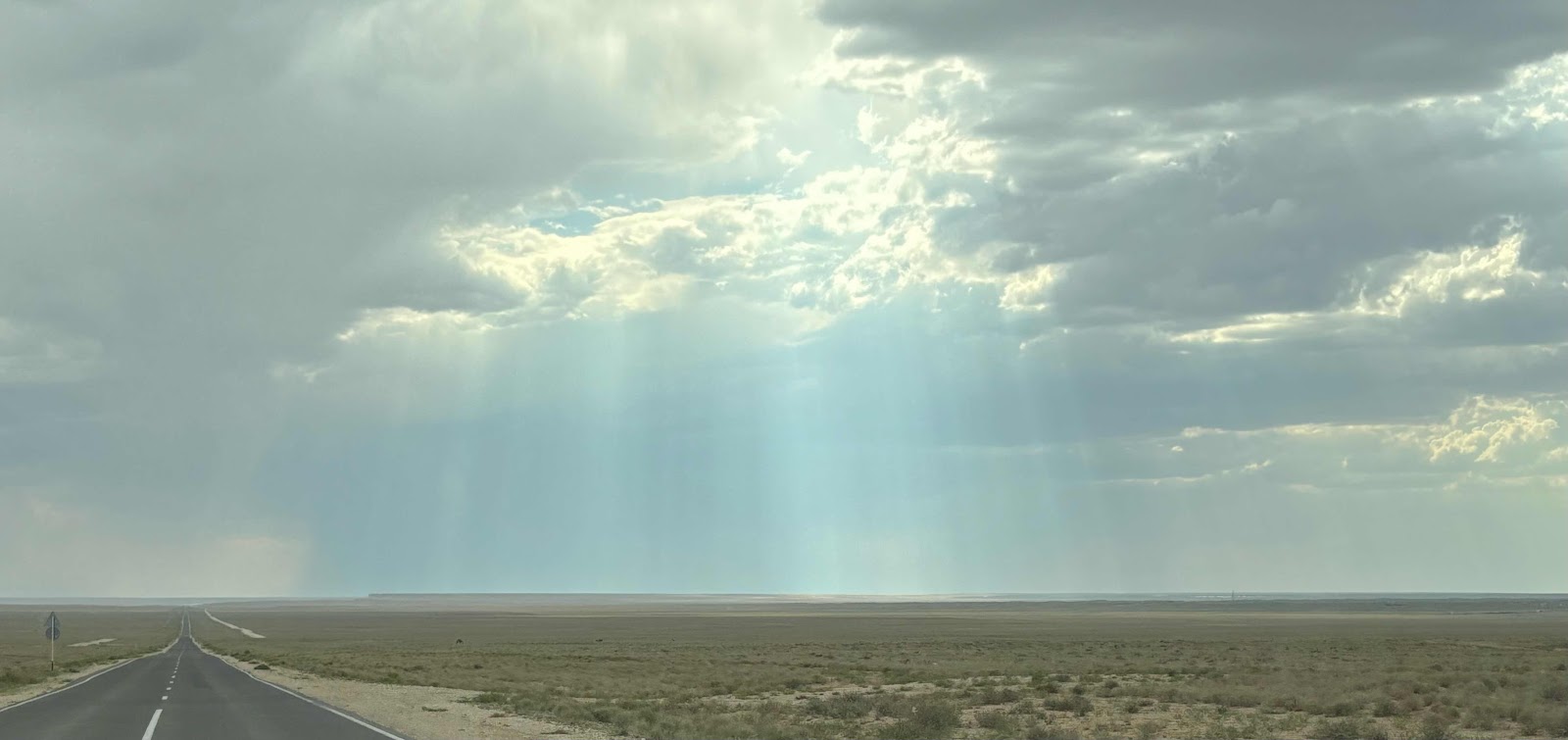
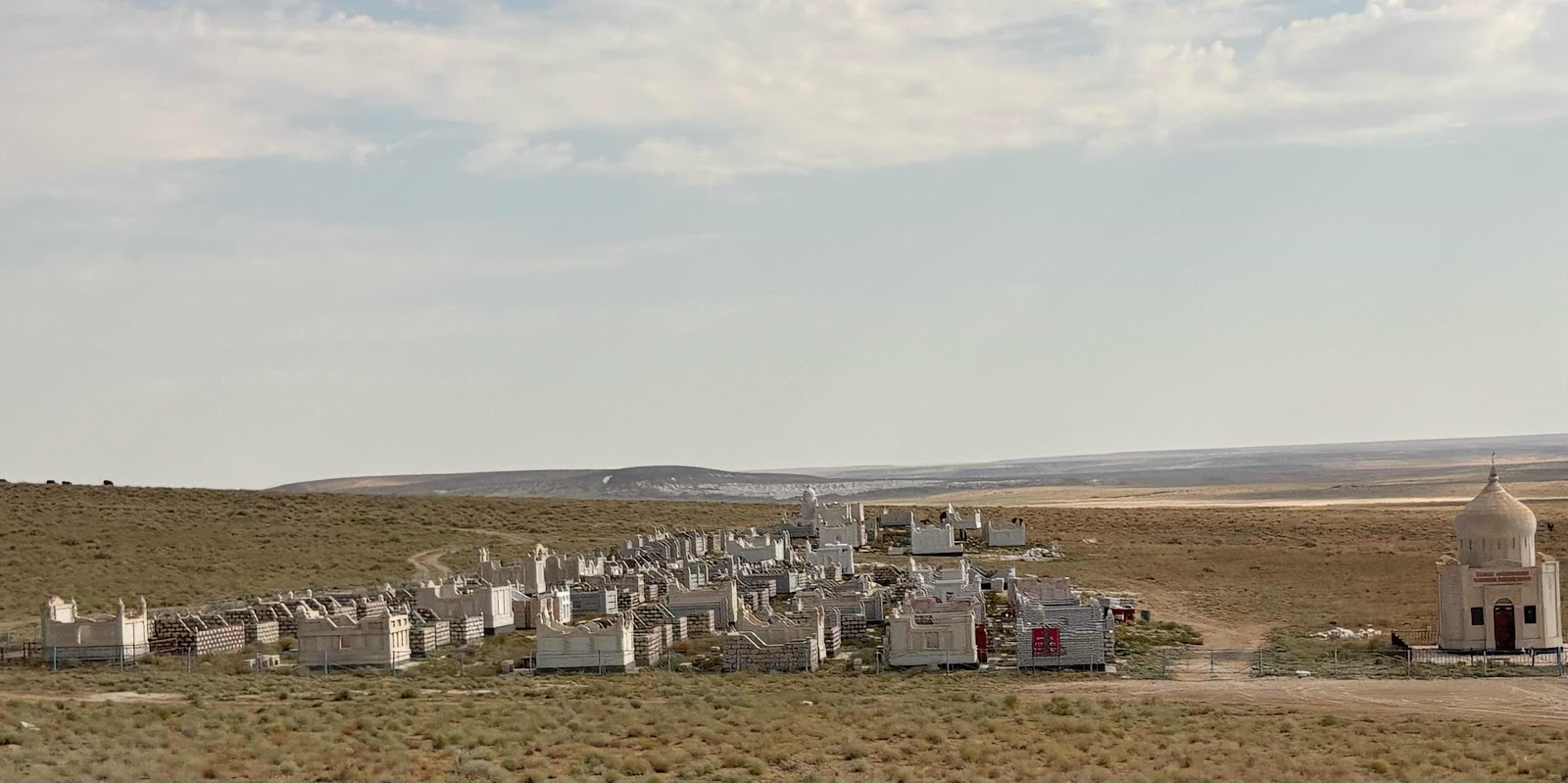
One of many Muslim burial sites we passed en route to Becket-Ata.
Shopan Ata Holy Site:
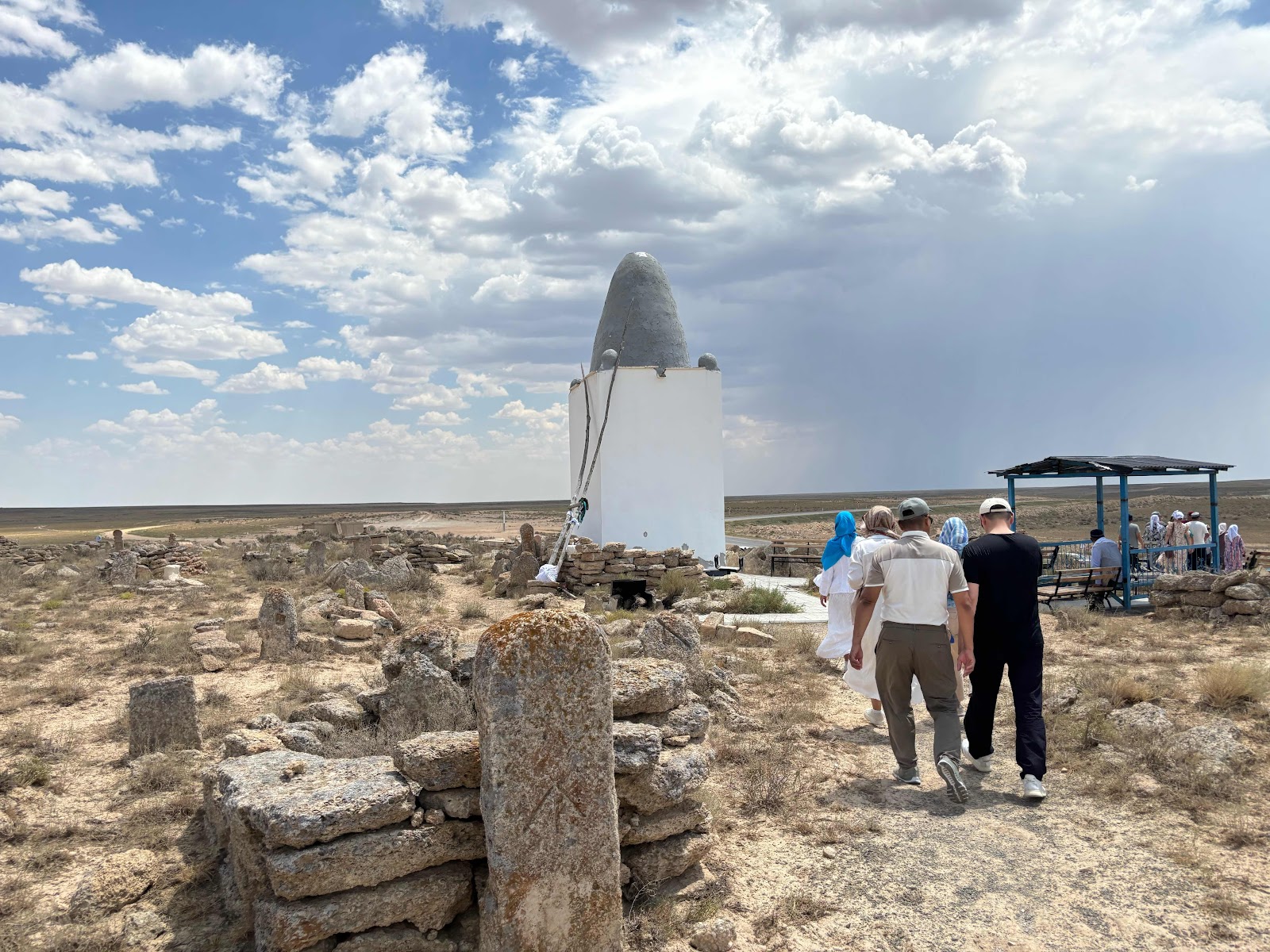
Built in the 10th-12th centuries, the underground mosque is one of the oldest religious sites in Kazakhstan. Here, one can find the grave of Shopan Ata, a famous religious figure, Sufi, and educator. The mosque is surrounded by burial graves dating back to the 9th -14th centuries.
According to legend, Shopan Ata was a disciple of Khoja Ahmet Yasawi, a prominent Turkic Sufi and poet. Yasawi once gathered all his disciples and asked each to shoot an arrow through the circular opening at the top of a yurt. Disciples then had to go preach and spread their ideas wherever their arrows landed. Shopan Ata’s arrow is said to have landed in the Mangystau desert, so he had to go there all the way from Turkistan to preach Sufism, a new religious practice within Islam.
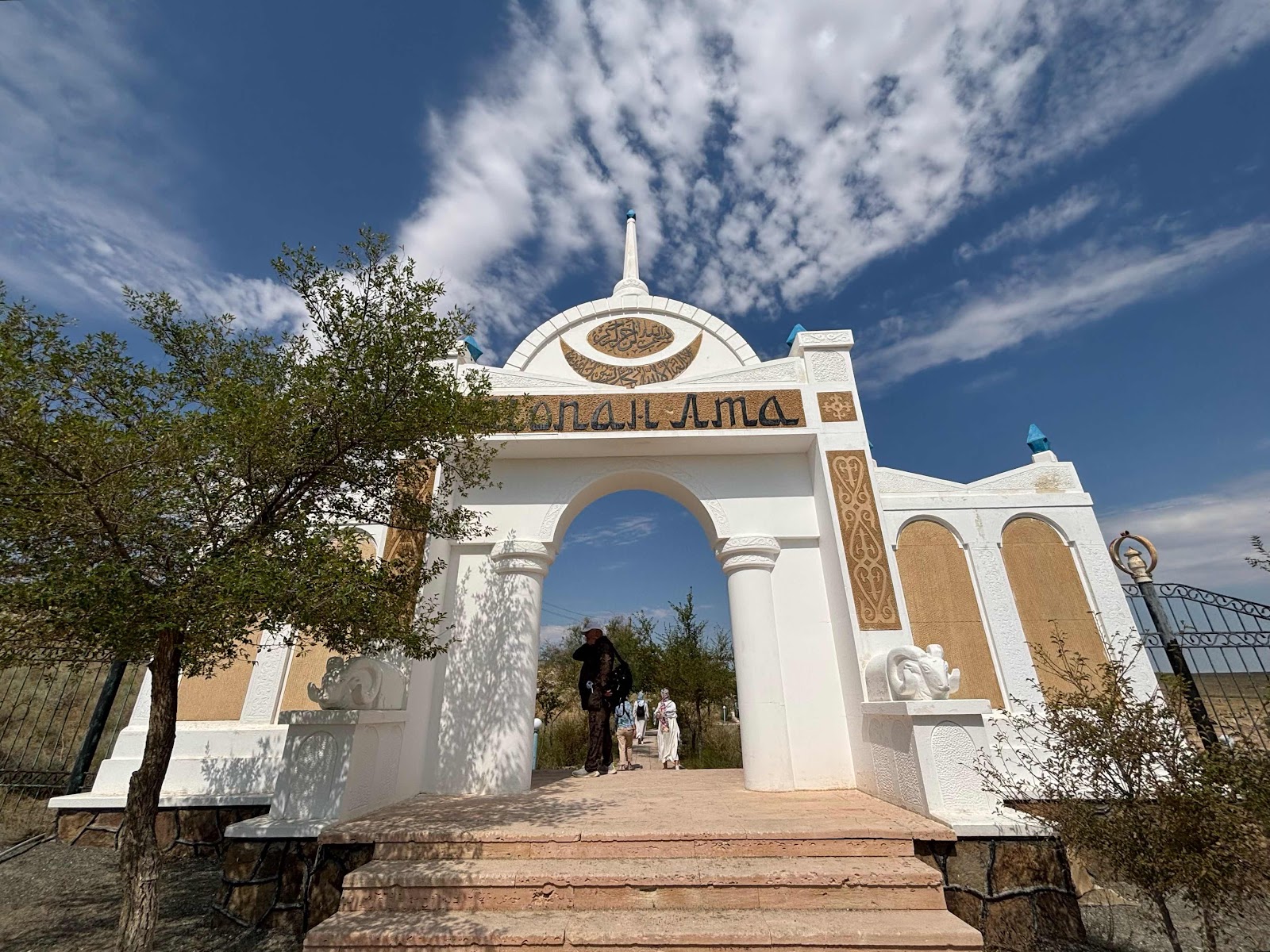
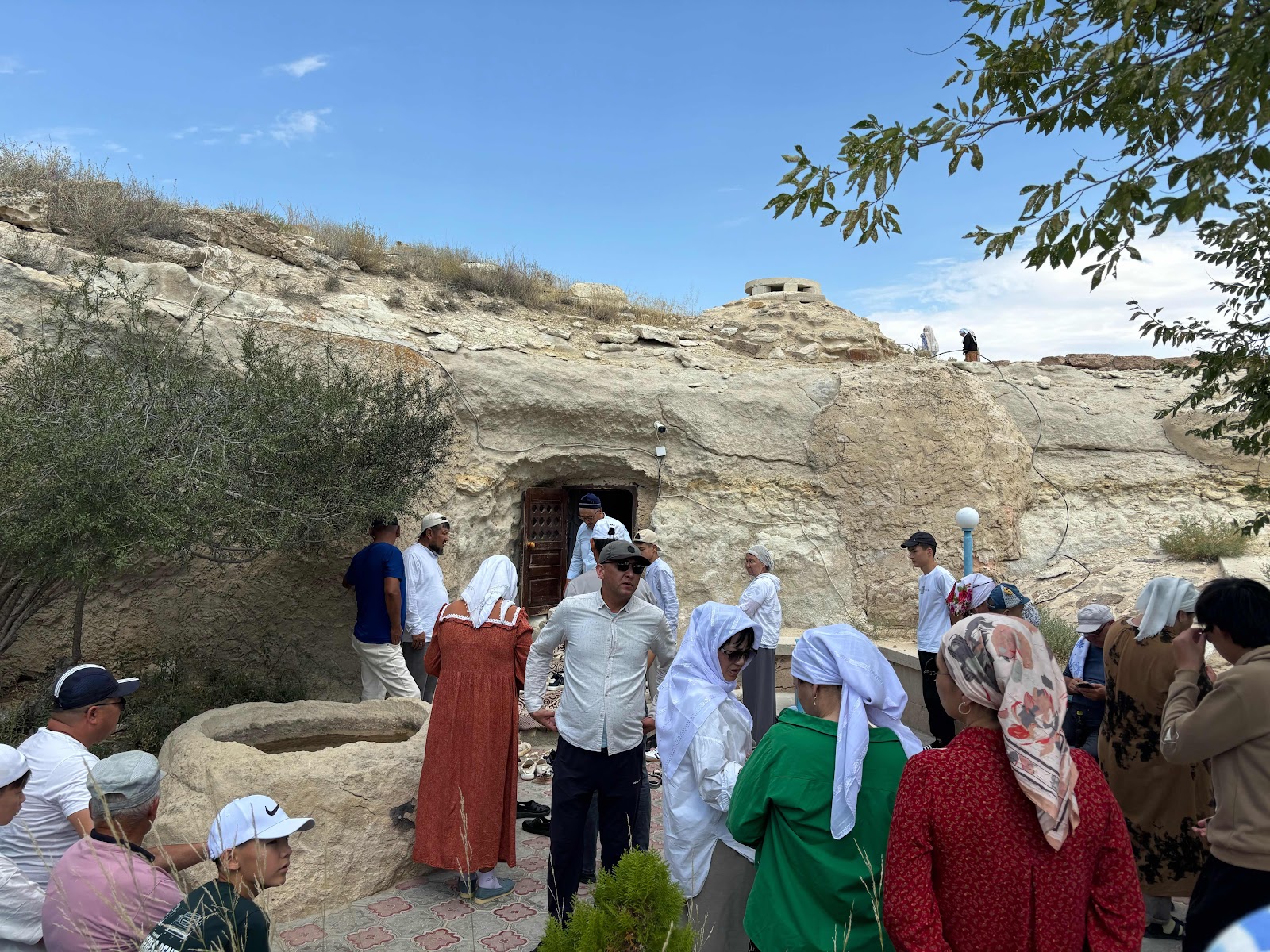
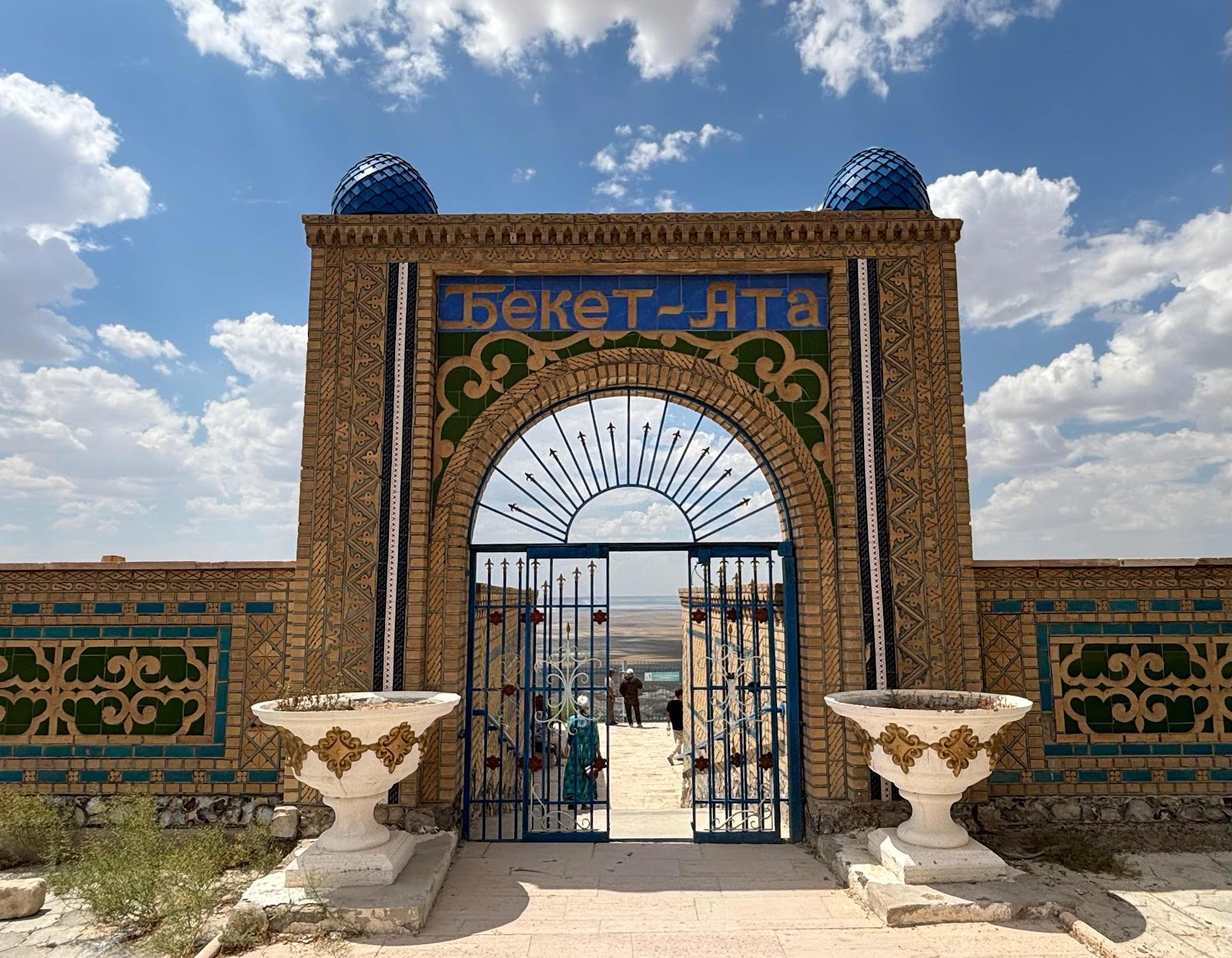
The mosque, which is inside the entrance shown above, consists of 12 rooms cut inside the rock. Each of these rooms serves a specific purpose. Some rooms are used for religious rituals, while others serve as study rooms. The central room is a small rectangular hall with a circular hole in the ceiling. In the very center of the room, stand two long wooden poles. The pilgrims consider this place sacred.
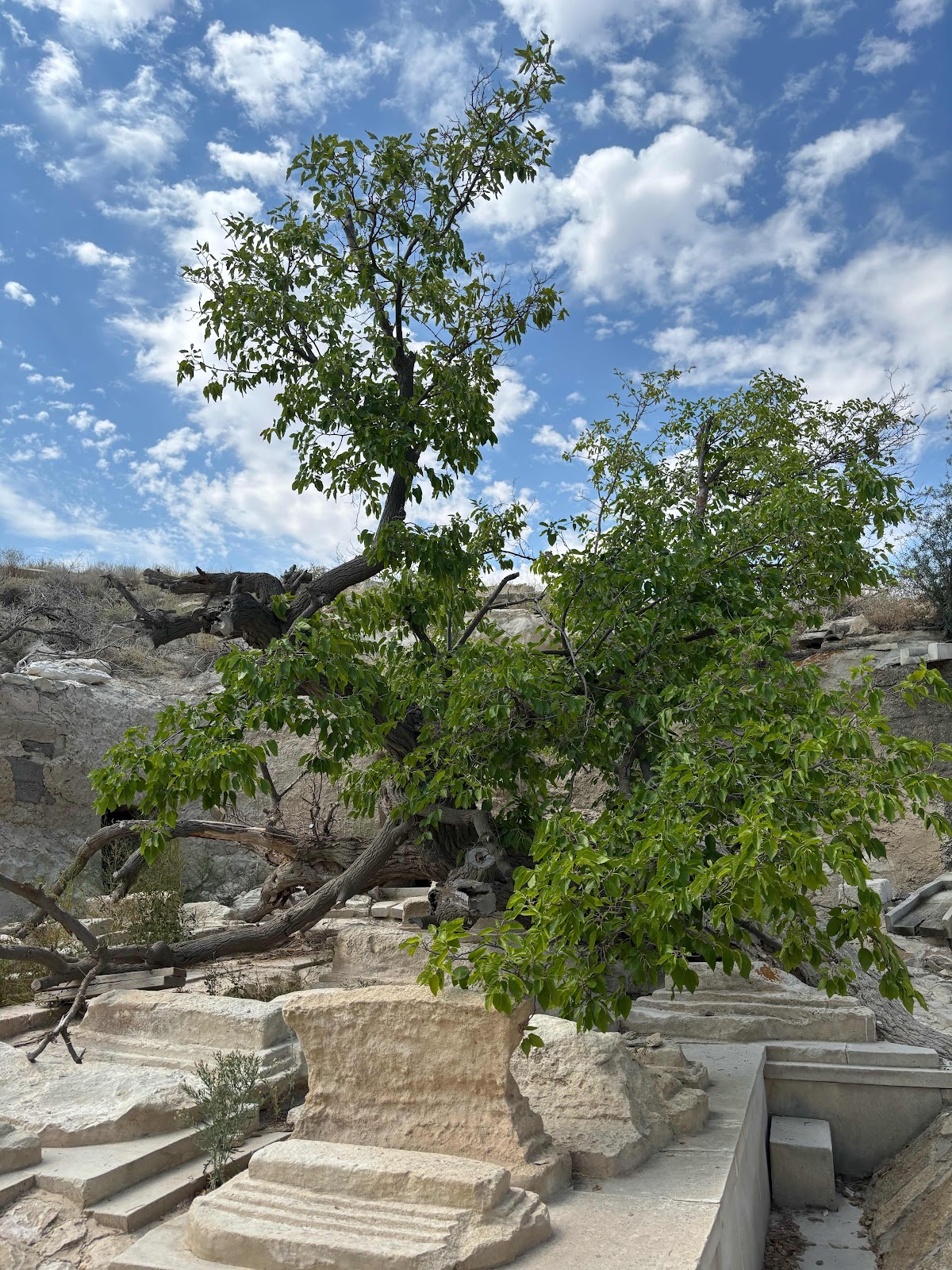
This mulberry tree grows next to the entrance of the small underground mosque. Legend has it that Shopan Ata’s arrow landed right here. The plant is presumably 900 years old and is said to health people of back pain.
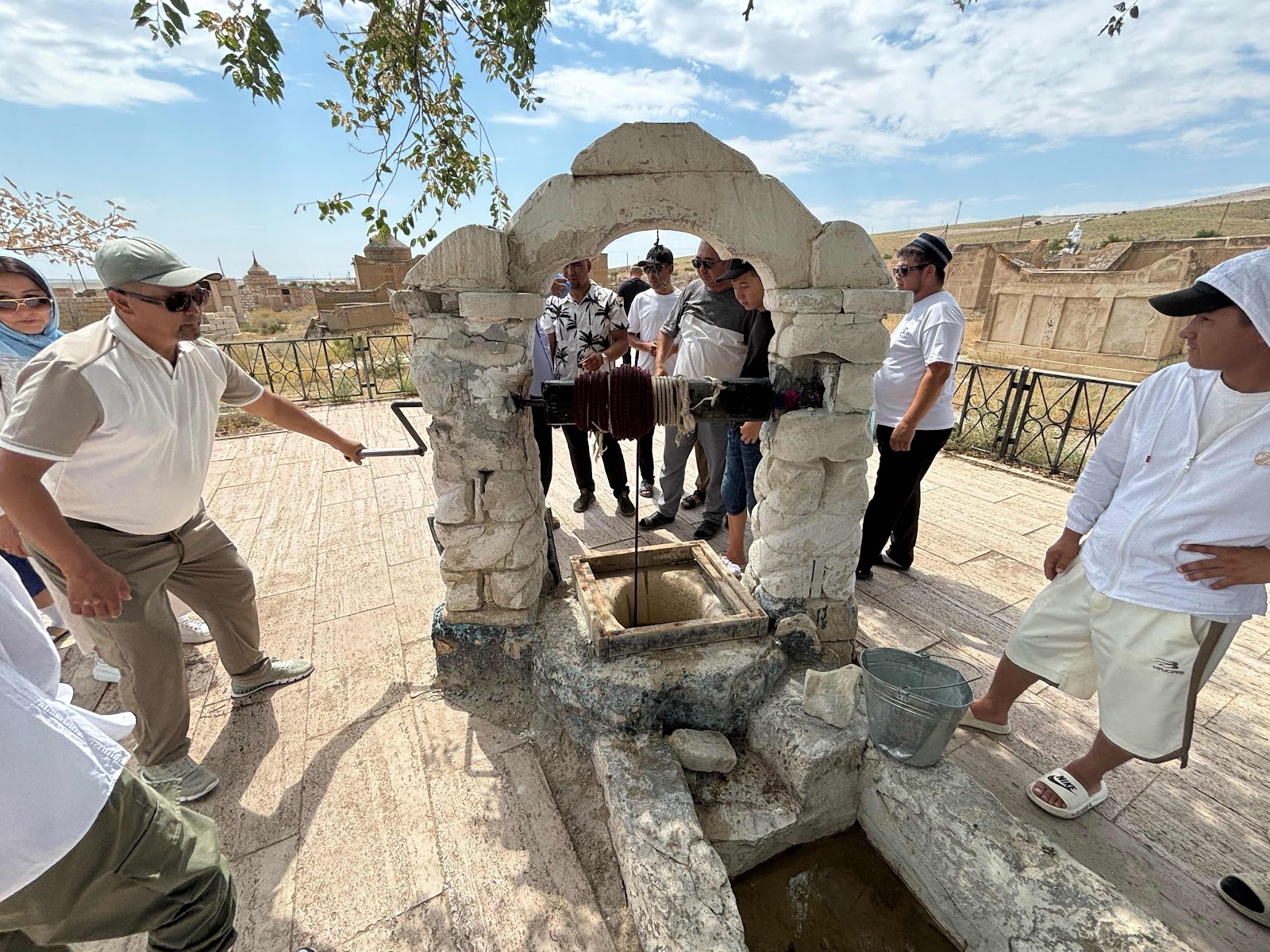
The well was empty at Shopan Ata, which rarely happens, we heard.
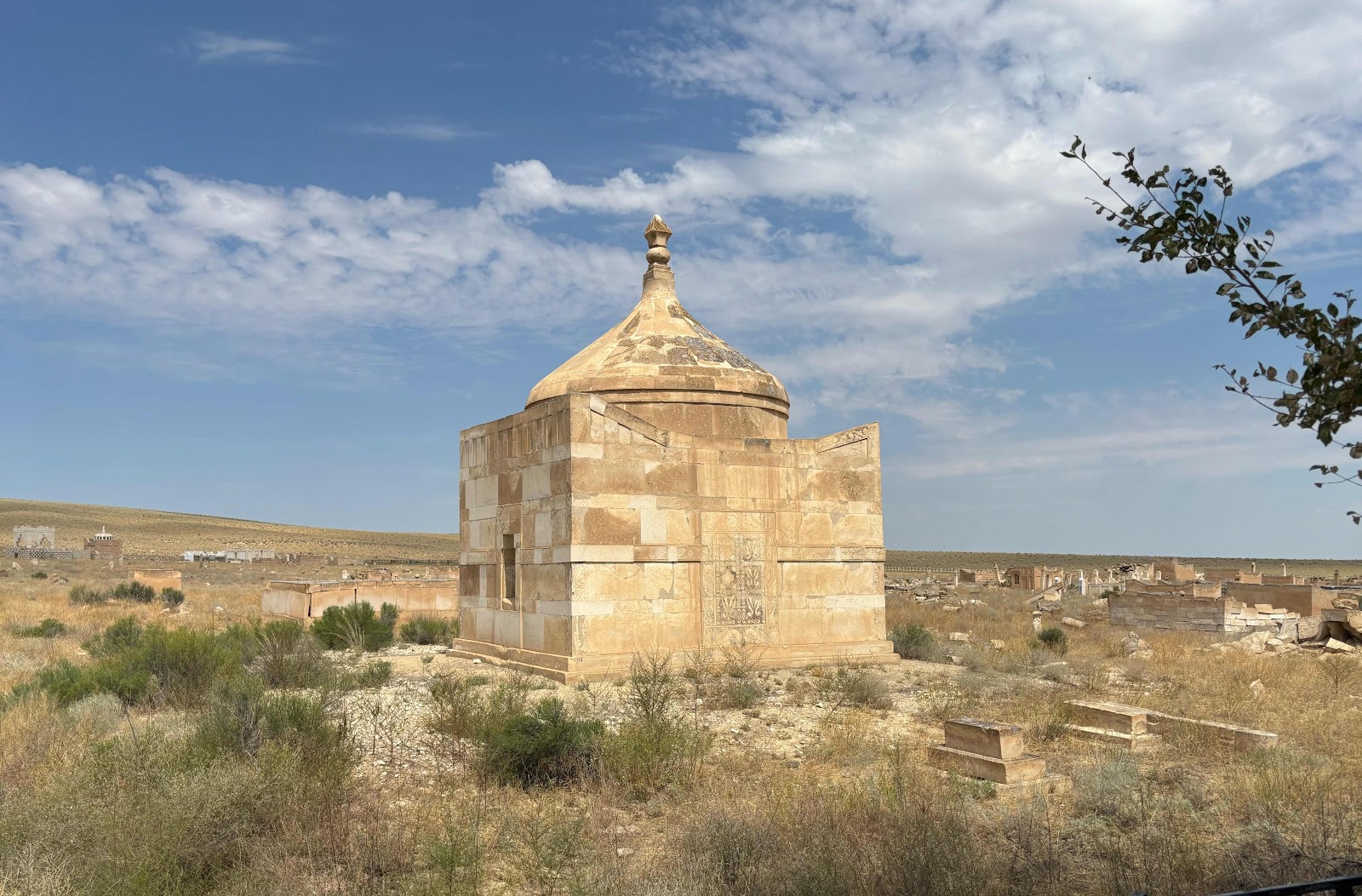
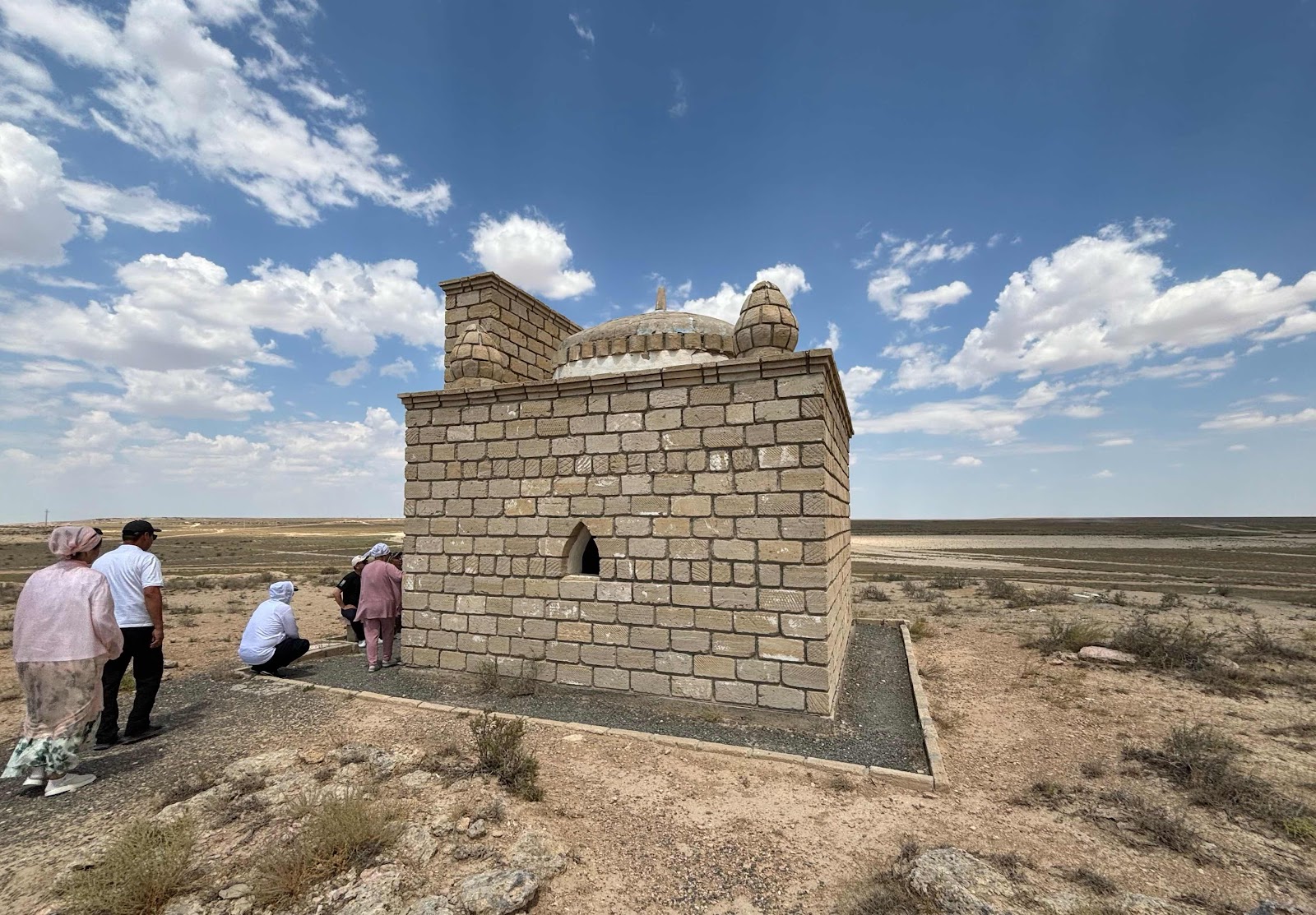
Under the Soviets, the holy sites were closed and abandoned. When the Soviet empire collapsed in 1991, the people slowly began to renew knowledge of and interest in the holy sites, and they set about to clean them up and re-open them. Above, you see a burial tomb at Shopan Ata.
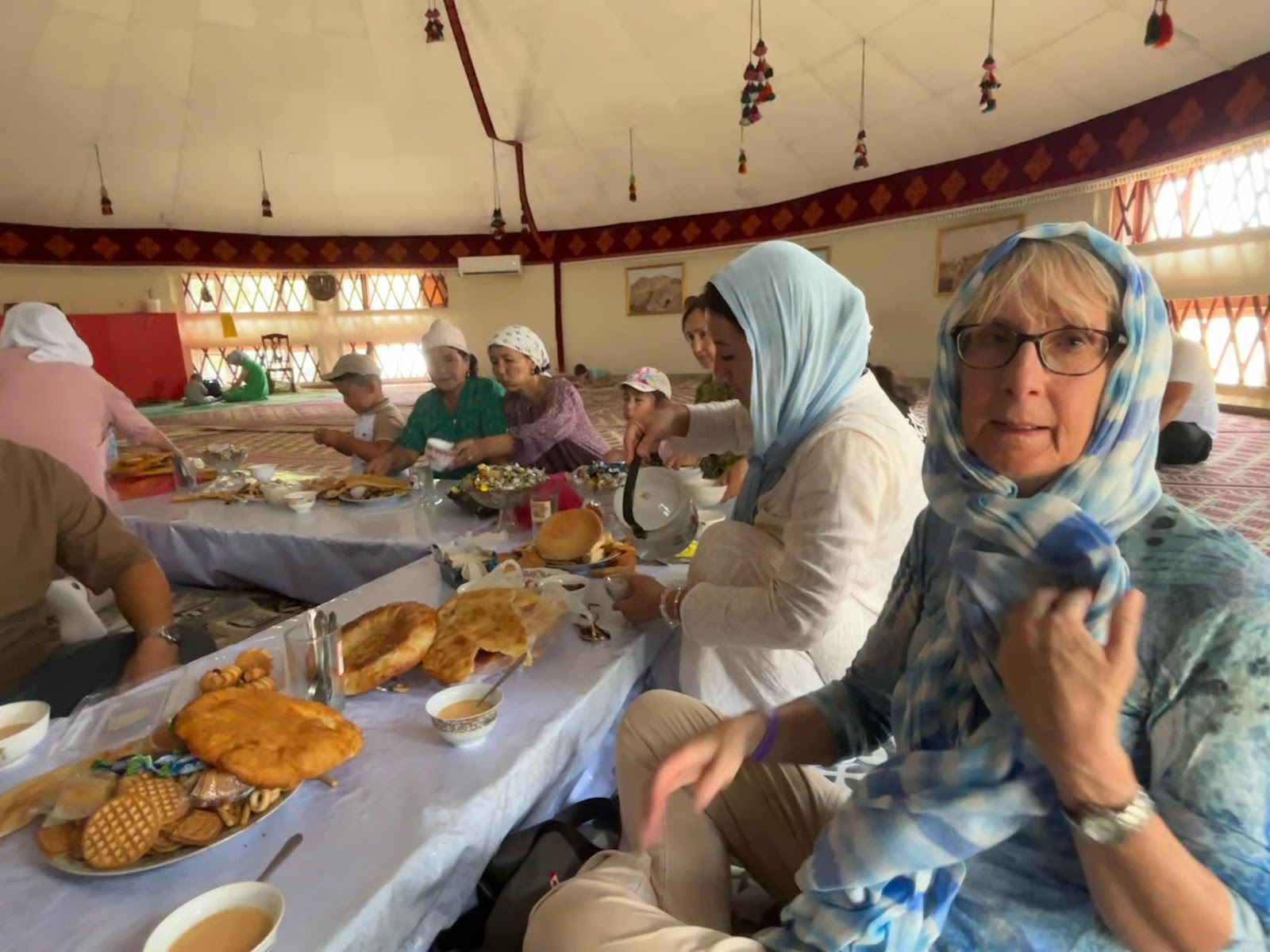
A communal meal after visiting the underground mosque at Shopan Ata. People were extremely curious about us. Many asked, "Where from?" "Why here?" and, "How old you are?" Akbota kindly explained, "Don't take this the wrong way, but you are old - like my aunties and uncles. So they wonder how you have the energy to do a pilgrimage like this."
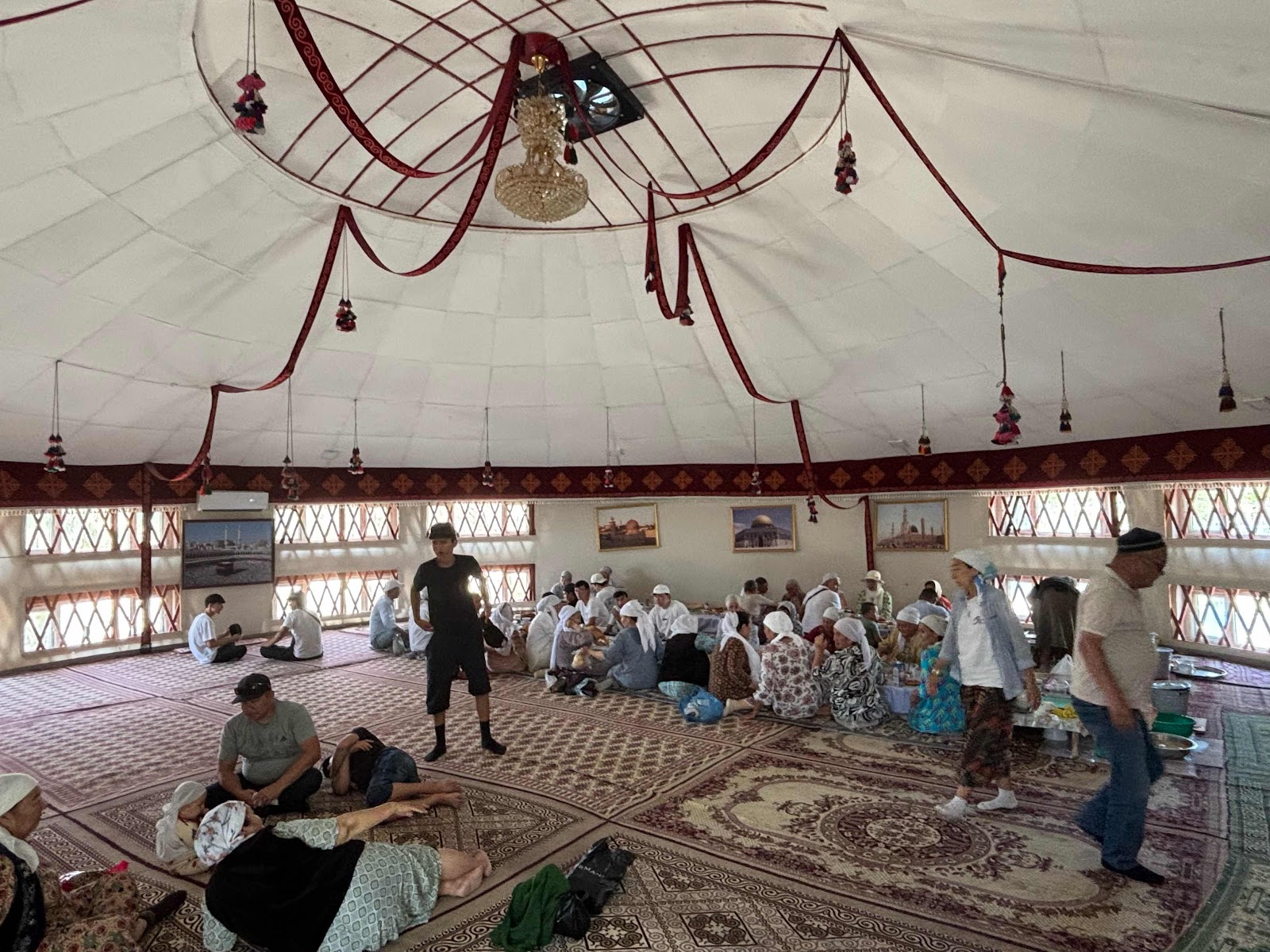
Inside the yurt at the communal meal. Later in the day, at the next holy site, beshbermak was served. Picture about 10 women sitting around a huge metal bowl of beshbermak, all eating from the same bowl with their right hands. ("Beshbermak" translate "five fingers".) It was quite an experience to be invited into these meals. Everyone brings some sort of food to contribute to the community, and there is hot tea in great quantities.
Beket-Ata Holy Site:
285km east of Aktau, Beket-Ata is the most important holy site in the area and is an extremely popular place of pilgrimage. It has a larger underground mosque than that of Shopan Ata. It is the final resting place of Sufi mystic and teacher, Beket-Ata, who lived 1750–1813. The mosque is near the bottom of a canyon. Beket-Ata was born in Magystau and studied in Uzbekistan. He later founded four mosques and a Sufi school in the Mangistau region.
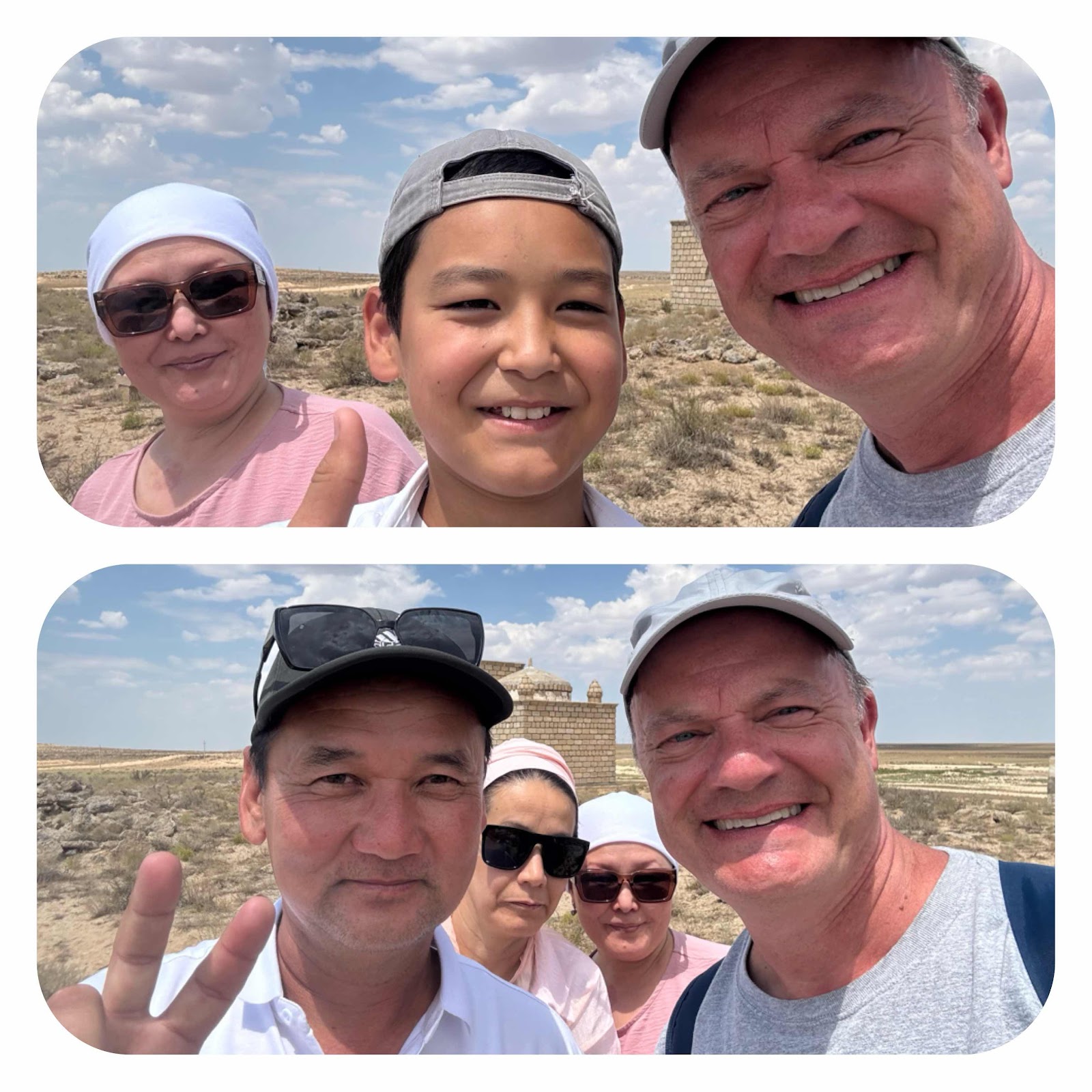
I must look really weird, because pilgrims kept wanting to have their photo taken with me.
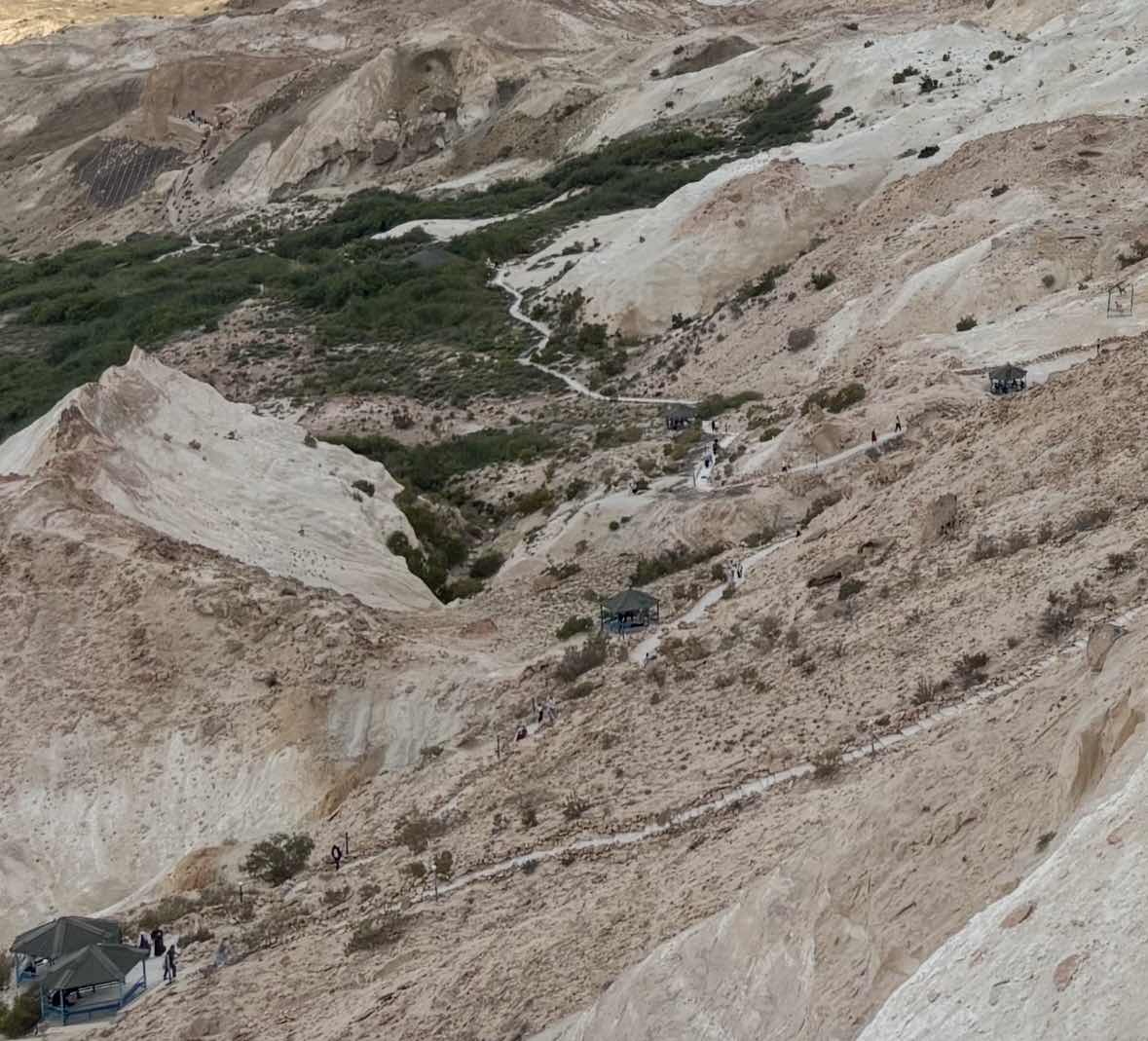
If you look closely, you can pick out the trail down into the canyon to the underground mosque at Beket Ata. It was a 1½ km trail down, which was bad enough. But it was the 1½ km return trek that just seemed un-doable in the extreme heat. In the end, we were happy with our decision not to do the trail and just to wait it out at the top of the cliff.
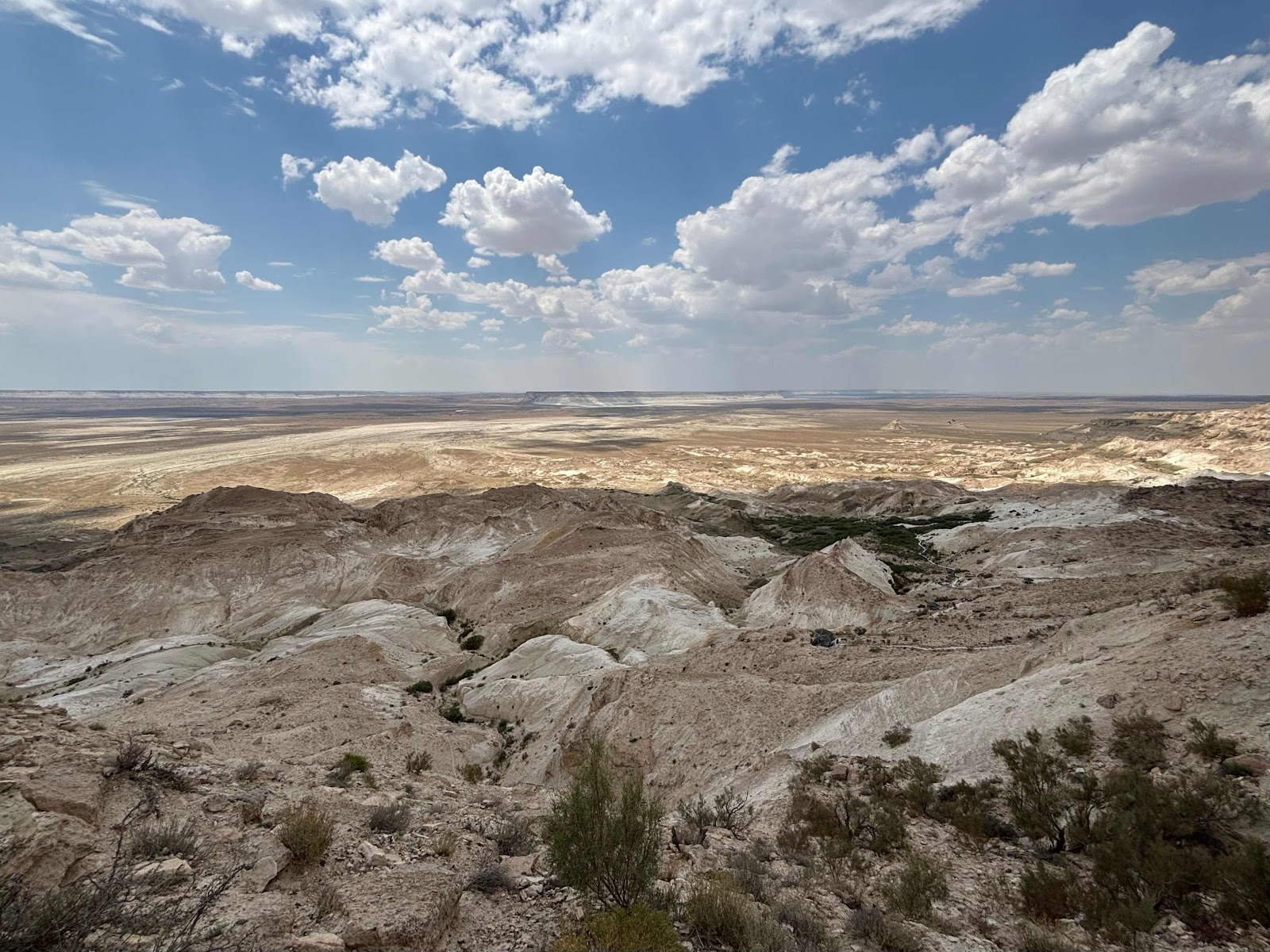
The view of the canyon from the top of the cliff.
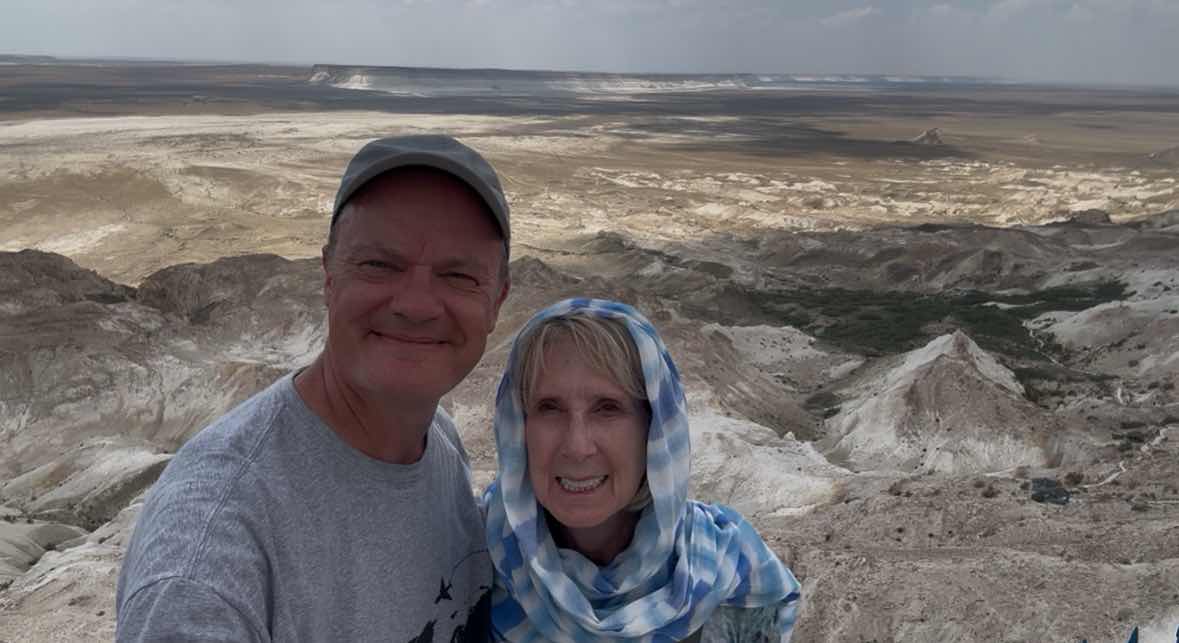
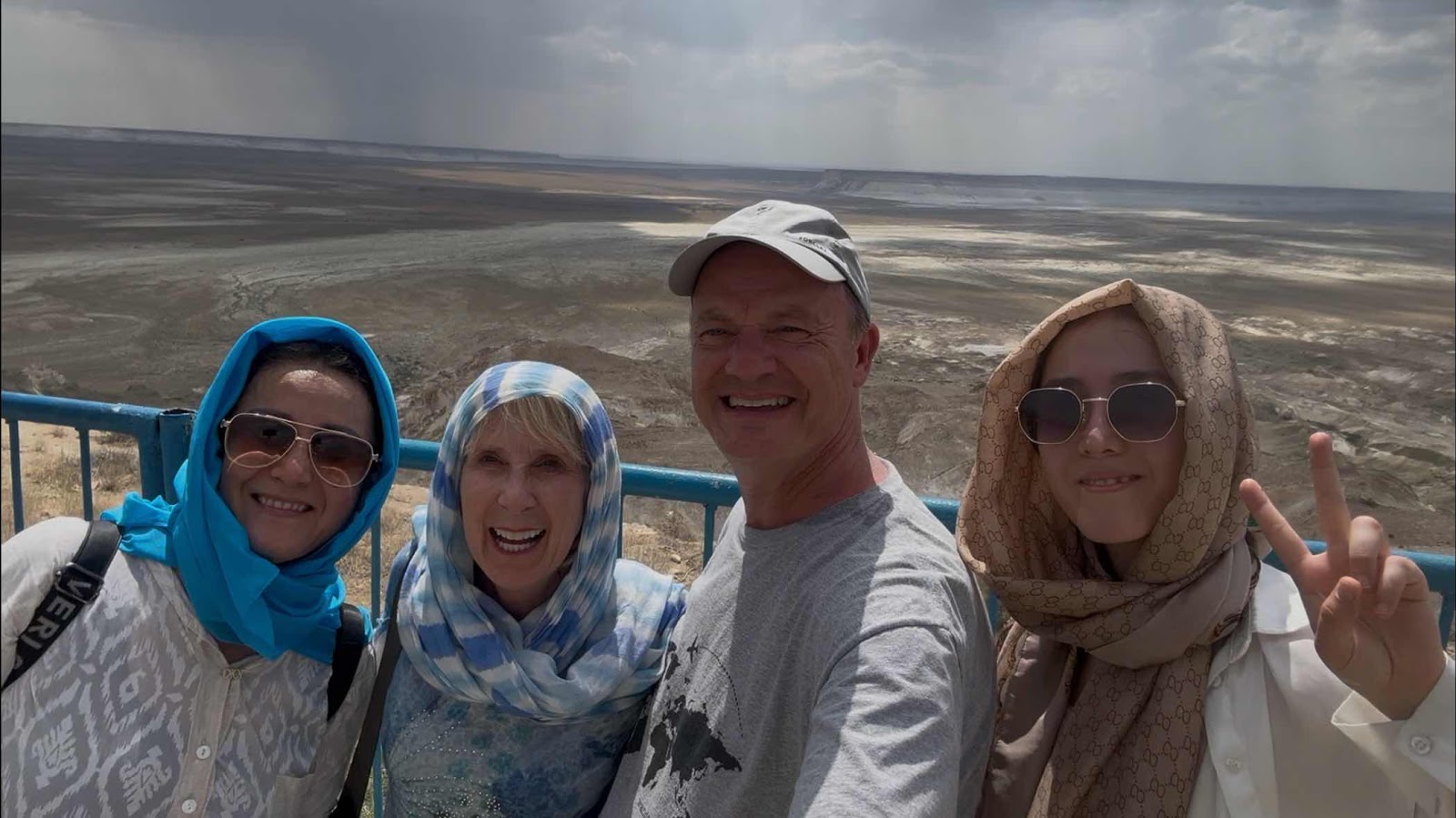
Our new friends, Akbota (right) and her mom (left), with whom we made the 13-hour pilgrimage today.
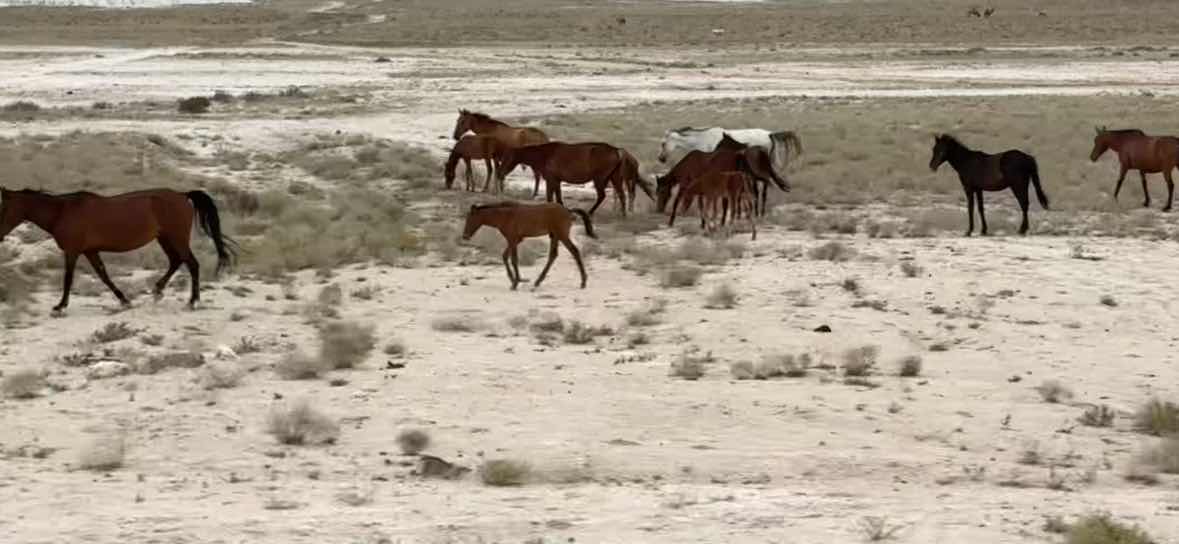
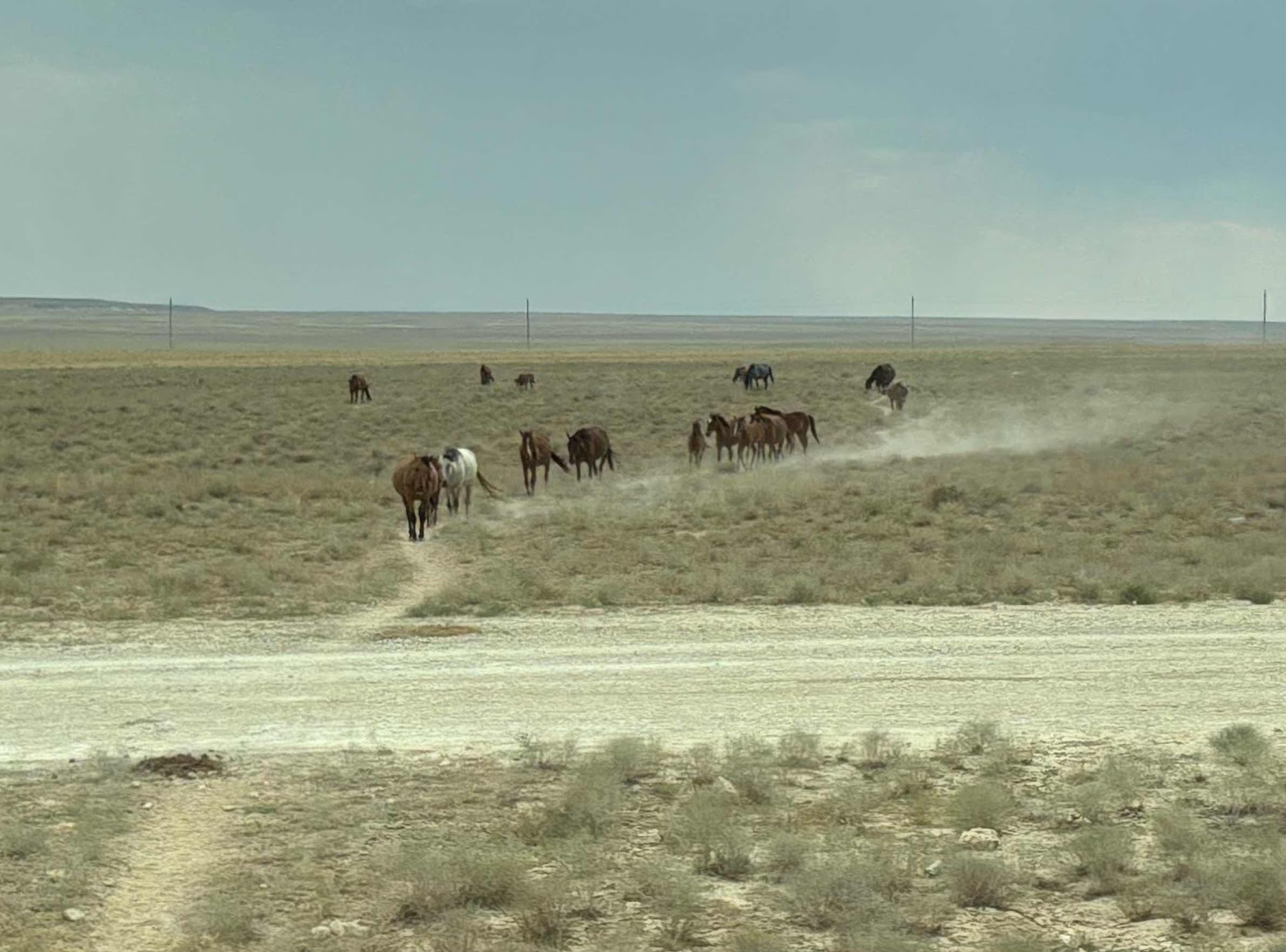
Horses on the way.
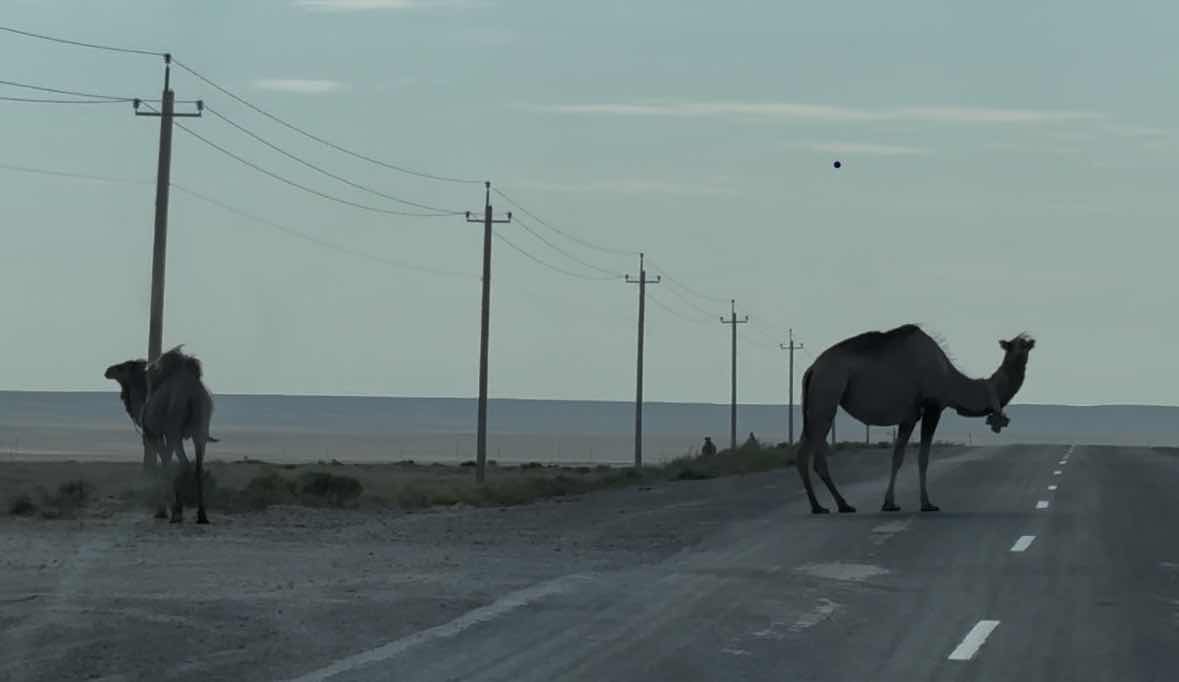
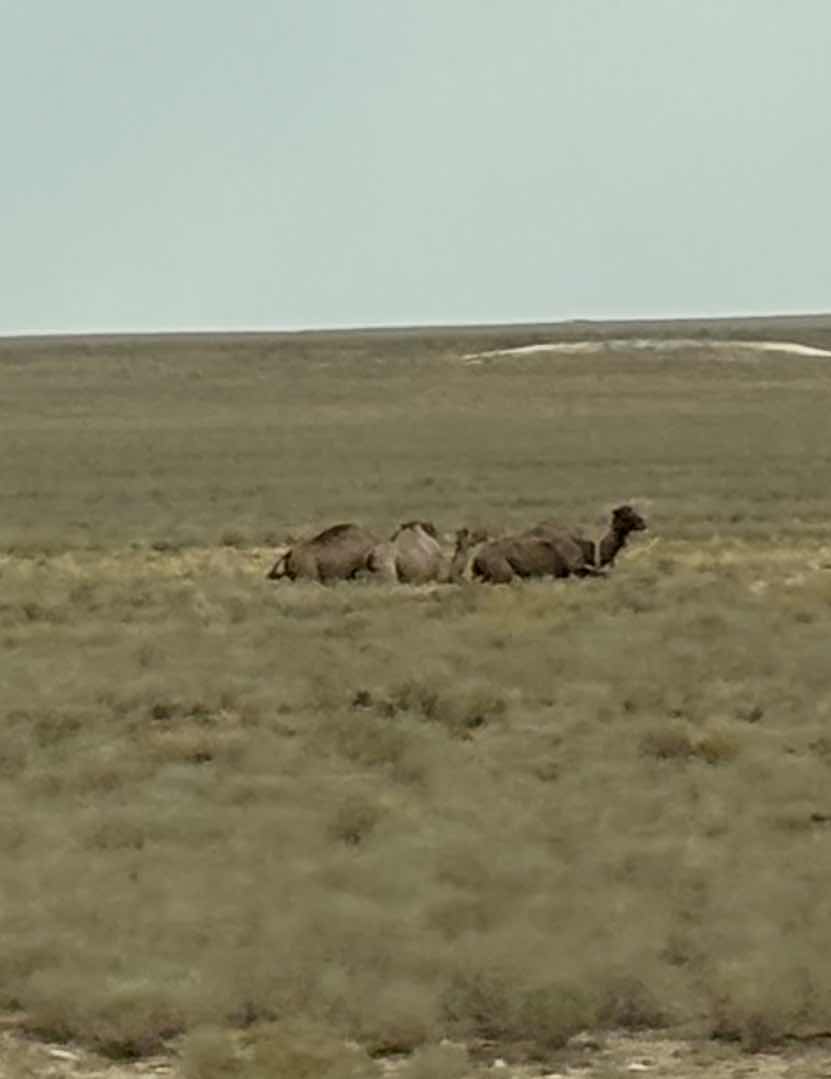
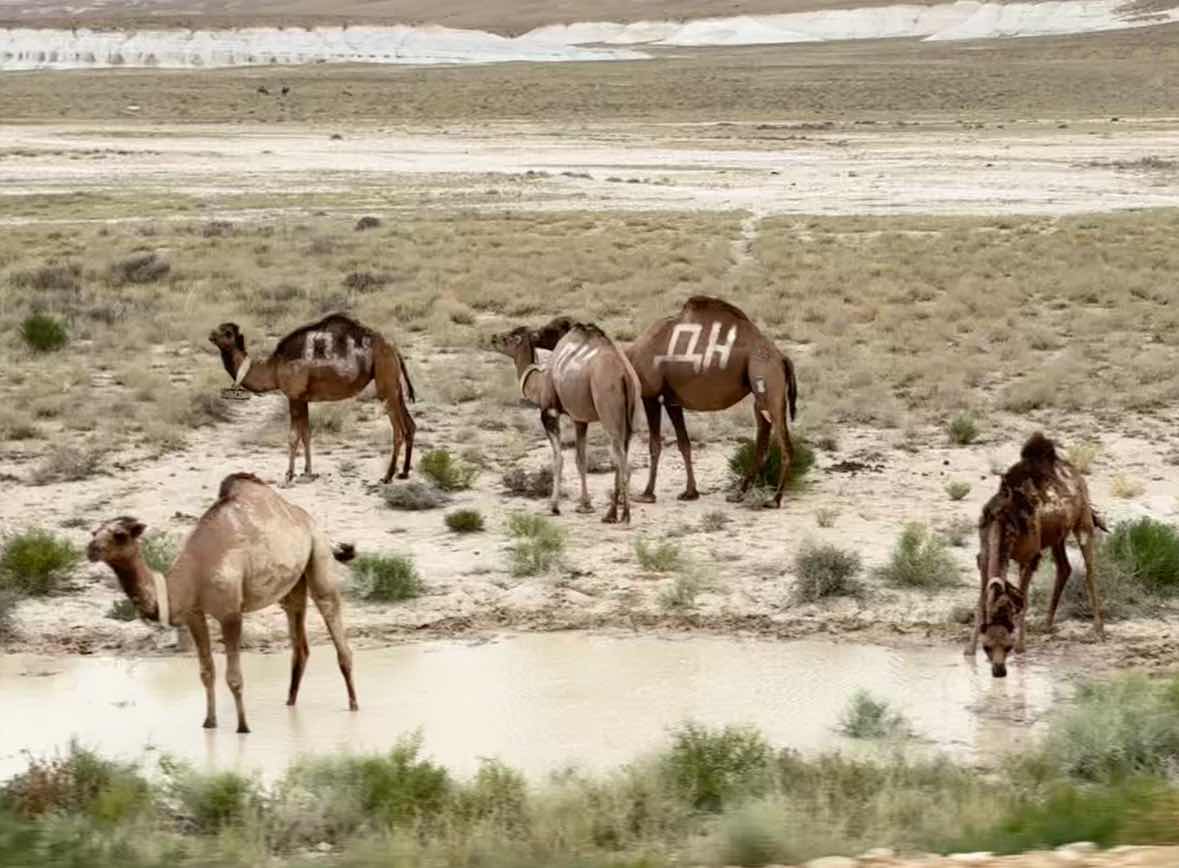
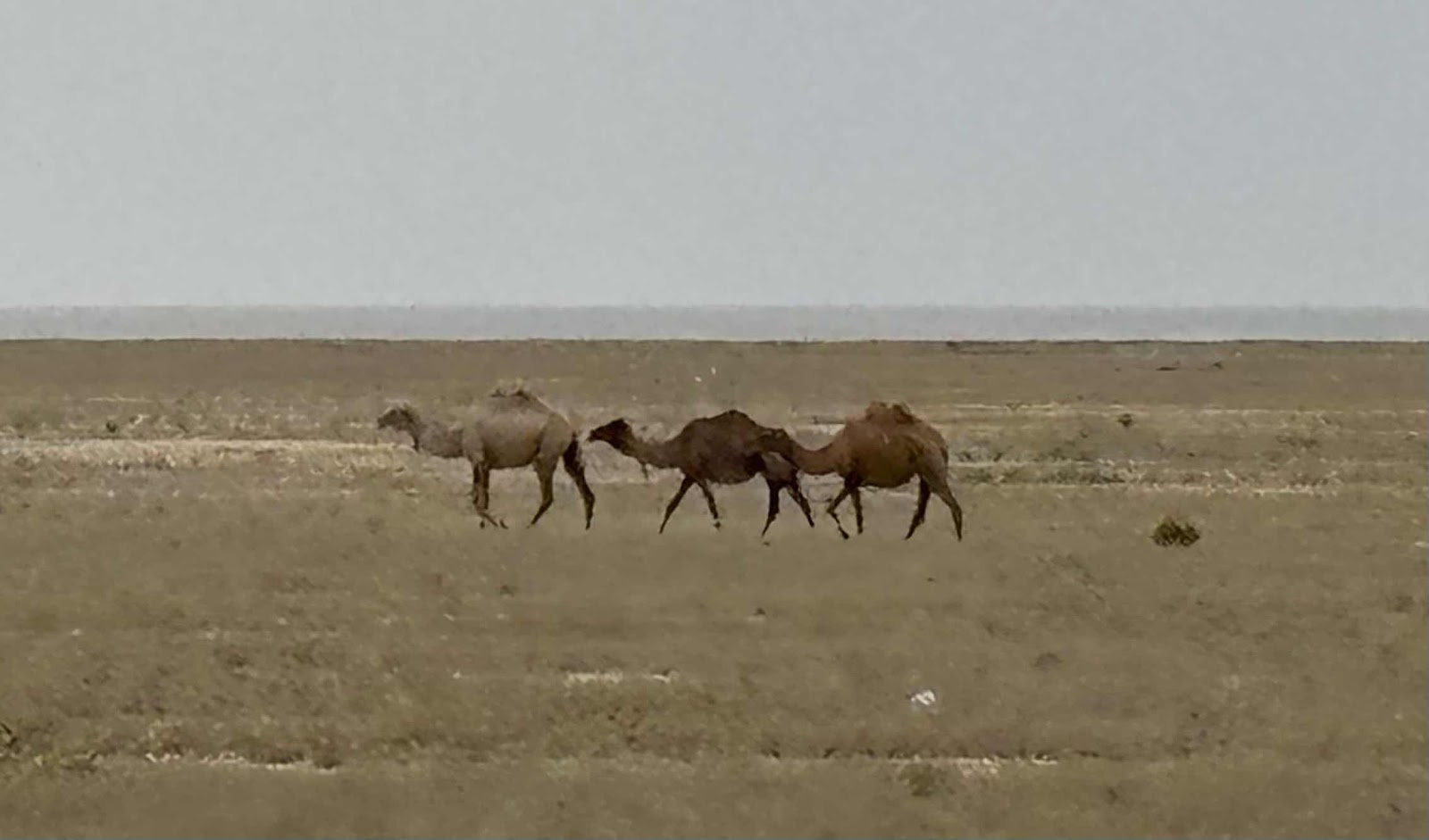
Camels on the highway are a real safety threat.
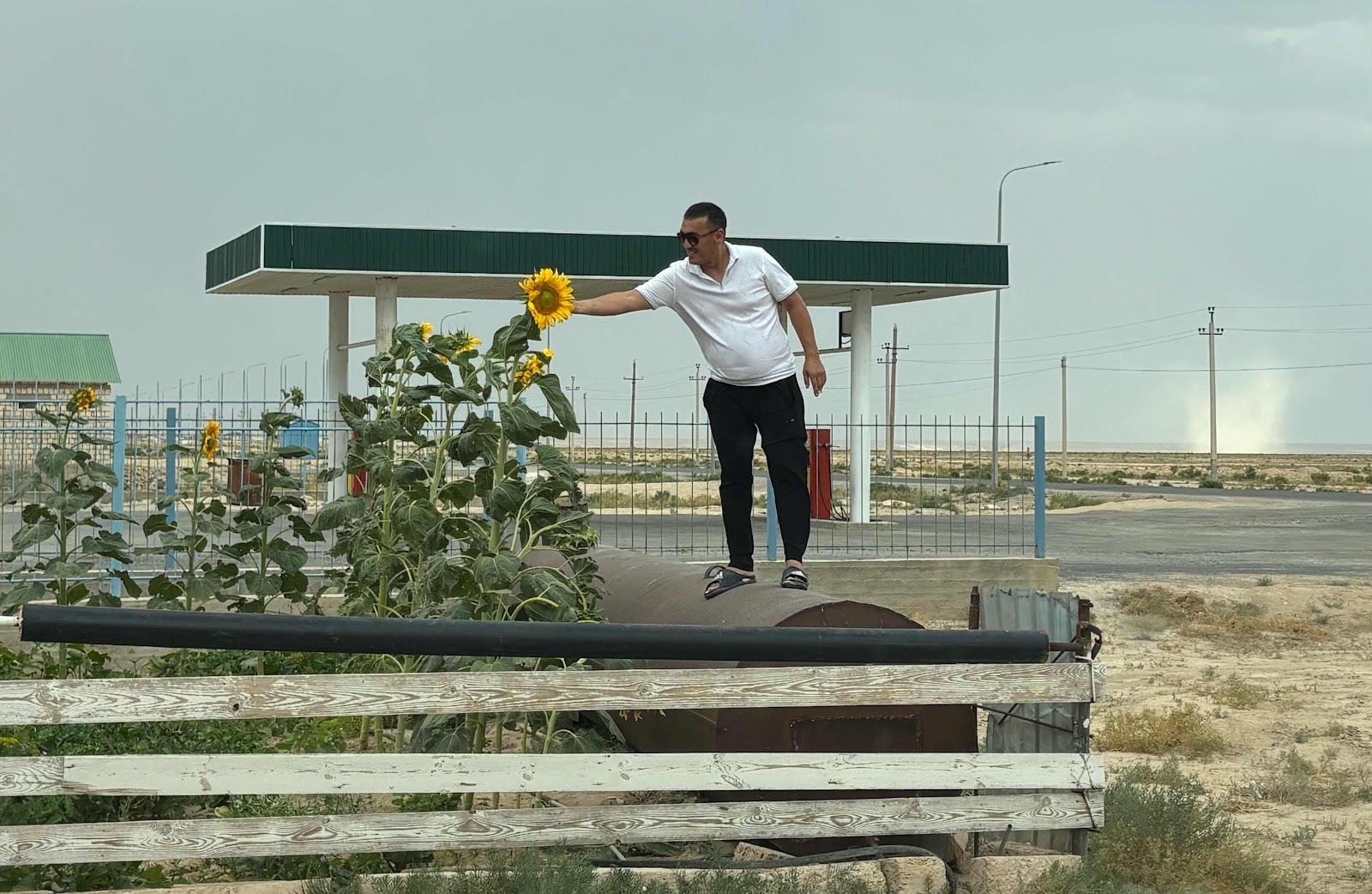
Our driver, checking out sunflowers, as his vehicle is filled with gas. Sunflowers are rare in these parts. Our driver, who has four kids and another on the way, works in the oil patch. He drives tourists and holy site pilgrims on his days off to supplement his income.
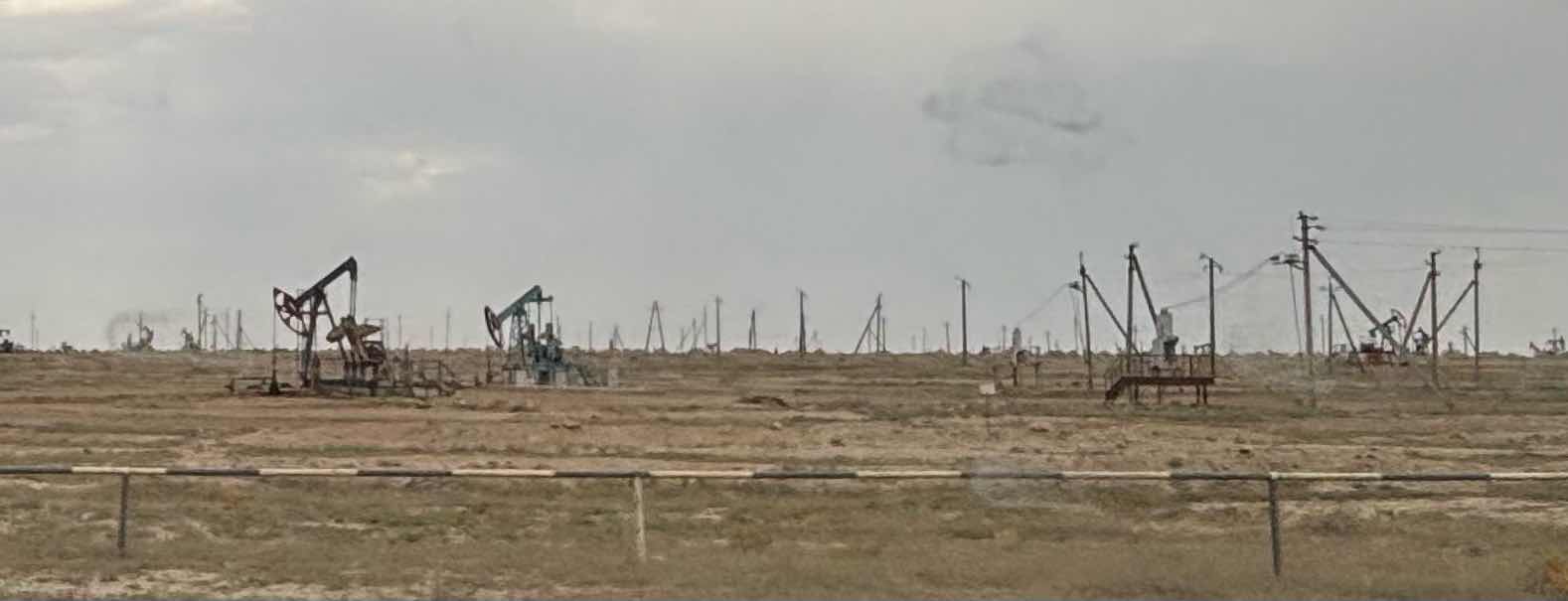
The oil fields of Mangystau Desert are quite something. Pumpers cover the landscape, and new wells are being drilled everywhere you look.
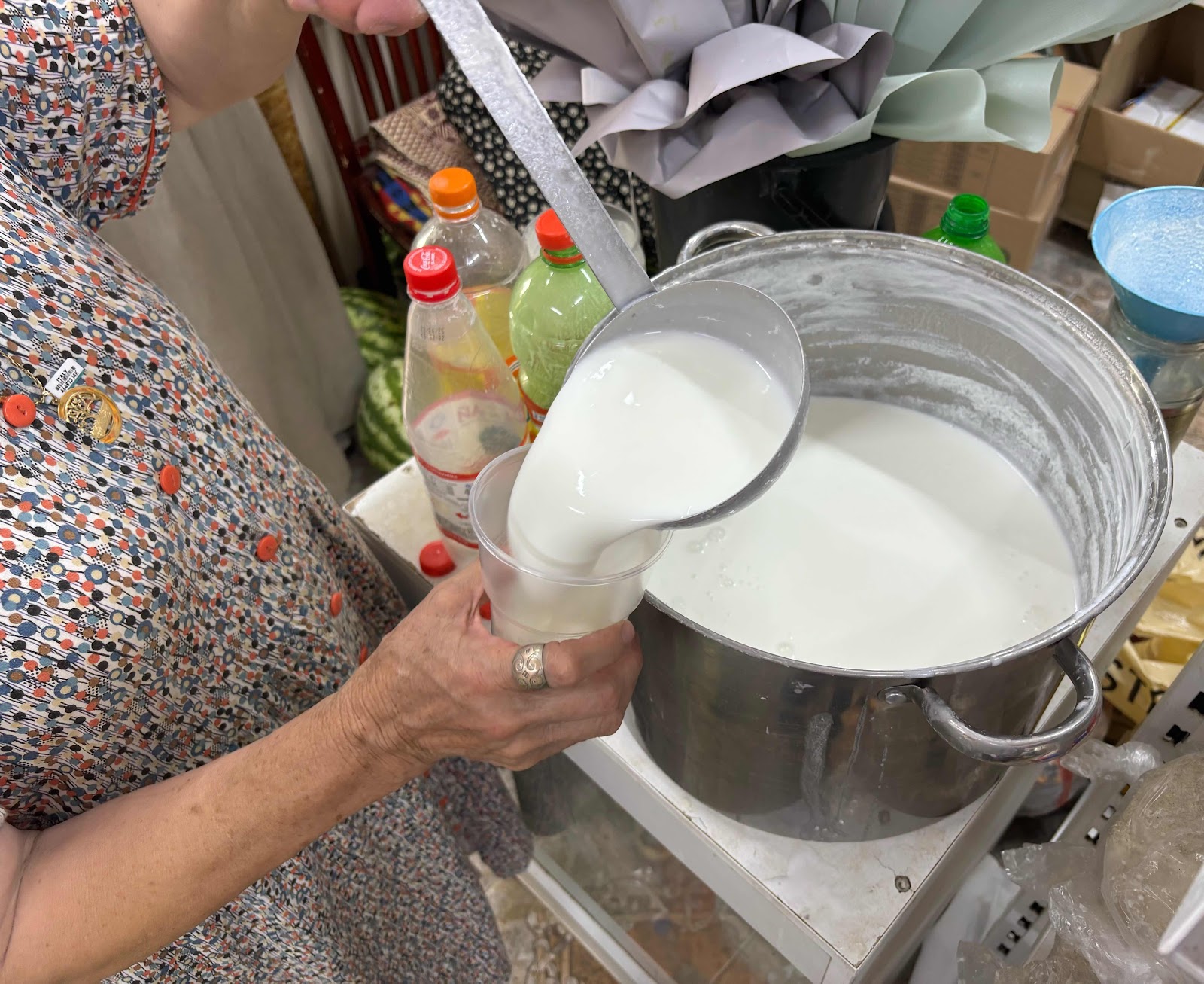
Camel's milk is a cool treat that the locals just love. Here, a woman in a convenience store on the side of the highway, serves it up for weary travelers. Yes, we were weary, but we weren't THAT weary! ;-)
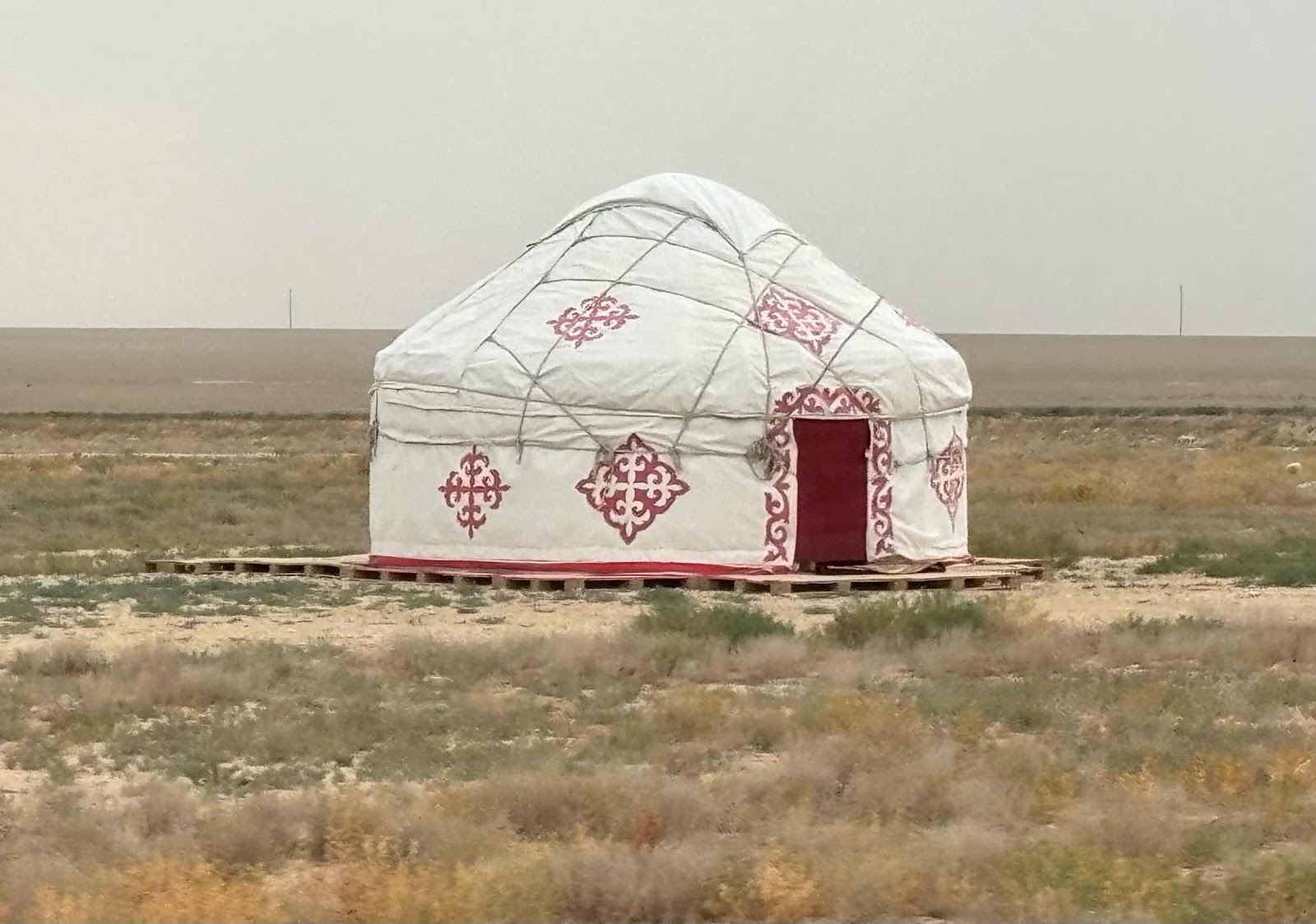
A roadside yurt on the route to Becket-Ata.
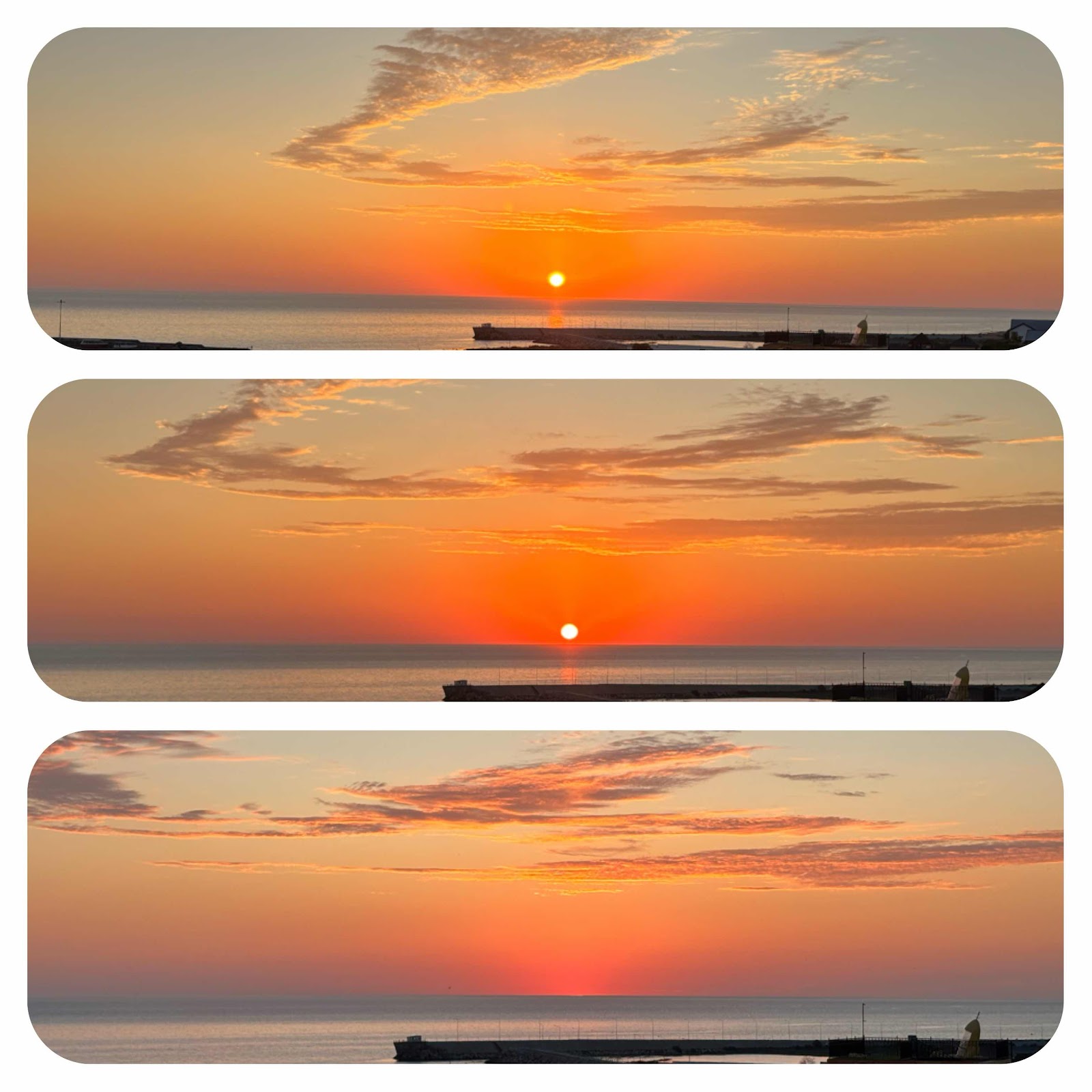
The sunset, as seen from our balcony, at the end of our 13-hour journey into the desert. Our last Kazakh sunset.
Comments
Post a Comment